fbpx

ทำไม SIX Network ถึงวางบทบาทเป็นโครงสร้างพื้นฐานสำหรับ RWA

ทำไม SIX Network ถึงวางบทบาทเป็นโครงสร้างพื้นฐานสำหรับ RWA

Why SIX Network Is Building Infrastructure for RWA

เราเดินหน้าพัฒนา RWA infrastructure เพื่อให้เมื่อผู้คนพูดถึง RWA จะนึกถึงการใช้งานจริงที่สร้างได้บน SIX Network

RWA กำลังได้รับความสนใจมากขึ้นในตลาด Web3 แต่สิ่งที่เกิดขึ้นในช่วงหลังสะท้อนว่าการเติบโตของ Real-World Asset Tokenization ไม่ได้อยู่ในระดับ narrative เพียงอย่างเดียวอีกต่อไป


ข้อมูลจาก RWA.xyz แสดงให้เห็นว่า Distributed Asset Value ของตลาด tokenized real-world assets อยู่ที่ประมาณ 27,650 ล้านดอลลาร์ ขณะที่ Represented Asset Value อยู่ที่กว่า 441,000 ล้านดอลลาร์ พร้อมจำนวนผู้ถือสินทรัพย์มากกว่า 710,000 holders ตัวเลขเหล่านี้สะท้อนว่าตลาด RWA กำลังขยับจากการทดลองเชิงเทคโนโลยี ไปสู่โครงสร้างสินทรัพย์ดิจิทัลที่มีการใช้งานจริงมากขึ้นในหลายหมวดสินทรัพย์


สิ่งที่น่าสนใจคือตลาดโลกกำลังเดินมาในทิศทางเดียว
กับที่เราสร้าง infrastructure รองรับไว้


ตลาด RWA tokenization เติบโตเกือบ 5 เท่าในเวลาเพียง 3 ปี และในปัจจุบันมีมูลค่าบนเชนแตะระดับกว่า 32,000 ล้านดอลลาร์ สถาบันการเงินระดับโลกอย่าง BlackRock, Franklin Templeton และ JPMorgan ต่างก้าวเข้ามาในพื้นที่นี้อย่างจริงจัง ซึ่งไม่ใช่สัญญาณของการทดลองอีกต่อไป แต่คือการยืนยันว่า RWA tokenization กำลังกลายเป็น infrastructure ใหม่ของระบบการเงินโลก


และตัวเลขที่นักวิเคราะห์คาดการณ์ไว้ยังสะท้อนขนาดของโอกาสในระยะยาว BCG เคยประเมินว่า tokenized assets อาจแตะระดับ 16 ล้านล้านดอลลาร์ภายในปี 2030 ขณะที่ Standard Chartered และ Synpulse คาดการณ์ว่าความต้องการ tokenized assets อาจแตะ 30.1 ล้านล้านดอลลาร์ภายในปี 2034 แม้แต่ละ forecast จะมีสมมติฐานและขอบเขตการนับที่แตกต่างกัน แต่เมื่อเทียบกับมูลค่าตลาดปัจจุบันที่ยังอยู่ในระดับประมาณ 32,000 ล้านดอลลาร์ ตัวเลขเหล่านี้สะท้อนภาพเดียวกันว่า RWA ยังอยู่ในช่วงต้นของการพัฒนา และยังมีพื้นที่เติบโตอีกมากเมื่อเทียบกับขนาดของสินทรัพย์จริงในระบบการเงินโลก


ความเคลื่อนไหวเหล่านี้ชี้ให้เห็นว่า tokenization กำลังถูกมองในระดับสถาบันการเงินมากขึ้น ไม่ใช่เพียงกระแสของตลาด Web3 เพราะเมื่อสินทรัพย์จริงถูกนำเข้าสู่ระบบ on-chain สิ่งที่ต้องรองรับไม่ได้มีแค่การออก token แต่รวมถึงการออกแบบโครงสร้างสินทรัพย์ การกำกับ การจัดการสิทธิ์ การเชื่อมต่อกับผู้ใช้งาน และการทำให้สินทรัพย์นั้นมี utility ที่สามารถใช้งานได้จริง


สำหรับ SIX Network นี่คือทิศทางที่เราให้ความสำคัญมาอย่างต่อเนื่อง


SIX Network พัฒนาโครงสร้างพื้นฐานสำหรับ Asset Tokenization เพื่อให้สินทรัพย์จริงสามารถเชื่อมต่อกับระบบบล็อกเชนได้อย่างเหมาะสมกับการใช้งานจริง ทั้งในมิติของการออกสินทรัพย์ดิจิทัล, การนำมูลค่าจริงเข้าสู่ระบบ on-chain, การจัดการ lifecycle ของสินทรัพย์ และการเชื่อมต่อกับภาคธุรกิจที่ต้องการโครงสร้างที่เชื่อถือได้


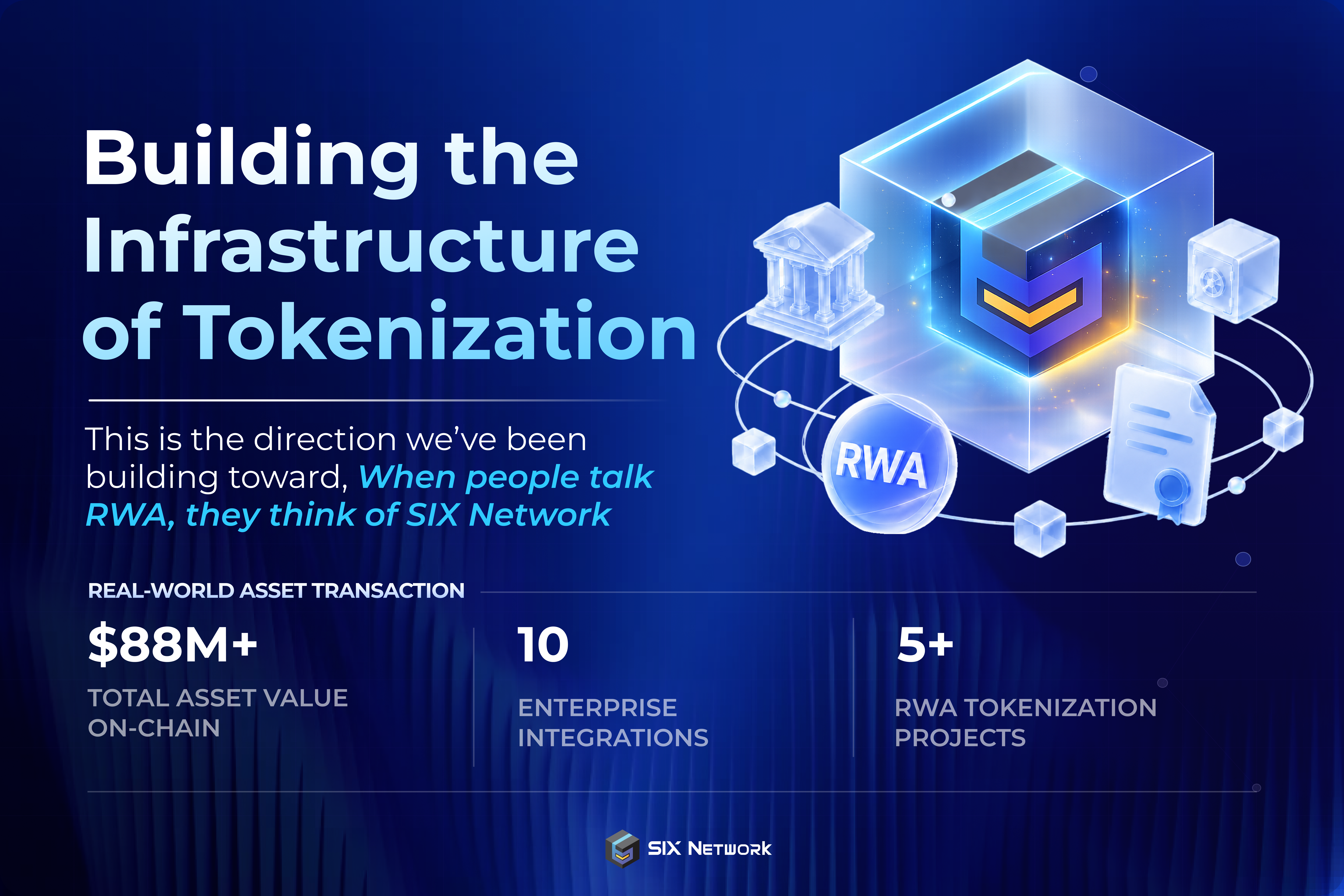
จากมูลค่าสินทรัพย์บนเชนกว่า 90 ล้านดอลลาร์ มีการเชื่อมต่อบล็อกเชนกว่าทั้ง 10 องค์กร และโครงการ RWA Tokenization อีก 5 โครงการ สิ่งเหล่านี้สะท้อนว่า SIX Network ไม่ได้มอง RWA เป็นเพียงเทรนด์ของตลาด แต่เป็นทิศทางที่เราพัฒนามาอย่างต่อเนื่อง


ในช่วงที่ตลาด RWA กำลังขยายตัว SIX Network ยังคงเดินหน้าพัฒนาโครงสร้างที่ทำให้สินทรัพย์จริงสามารถเข้าสู่เศรษฐกิจดิจิทัลได้มากขึ้น ตั้งแต่การออกแบบสินทรัพย์ การเชื่อมต่อกับ blockchain ไปจนถึงระบบที่รองรับการนำไปใช้งานจริง


สำหรับองค์กร เจ้าของสินทรัพย์ หรือพาร์ทเนอร์ที่กำลังศึกษาแนวทางการนำสินทรัพย์จริงเข้าสู่ระบบดิจิทัล SIX Network เปิดรับการพูดคุยเพื่อร่วมสำรวจความเป็นไปได้ของ asset tokenization และโครงสร้างพื้นฐานที่เหมาะสมกับการใช้งานจริง


เพราะการเติบโตของ RWA ไม่ได้เกิดขึ้นจาก narrative เพียงอย่างเดียว แต่ต้องอาศัย infrastructure ที่ทำให้สินทรัพย์จริงสามารถถูกออกแบบ เชื่อมต่อ และใช้งานบนระบบดิจิทัลได้อย่างเหมาะสม


เมื่อพูดถึง RWA เราอยากมีโอกาสให้ผู้คนนึกถึง SIX Network
ในฐานะโครงสร้างพื้นฐานที่พัฒนาขึ้นเพื่อการใช้งานจริง

ติดตามข่าวสารและอัปเดตได้ที่: 
Website: https://six.network/
X: https://x.com/theSIXnetwork
FB: https://www.facebook.com/thesixnetwork/


เข้าร่วม Community ของเรา:

Discord: http://discord.gg/sixnetwork
Telegram: https://t.me/+0BmqYVoV5j5lN2Jl

⎯⎯⎯⎯⎯⎯⎯⎯⎯⎯⎯⎯⎯⎯⎯⎯⎯⎯⎯⎯⎯⎯⎯⎯⎯⎯⎯⎯⎯⎯⎯⎯

หมายเหตุ:

1. บทความนี้จัดทำขึ้นเพื่อวัตถุประสงค์ในการให้ข้อมูลเท่านั้น ผู้ลงทุนควรศึกษาข้อมูลด้วยตนเองอย่างรอบคอบก่อนตัดสินใจลงทุนในสินทรัพย์ดิจิทัลหรือคริปโทเคอร์เรนซี


2. คริปโทเคอร์เรนซีและโทเคนดิจิทัลมีความเสี่ยงสูง ผู้ลงทุนอาจสูญเสียเงินลงทุนทั้งหมดได้ จึงควรศึกษาข้อมูลอย่างรอบคอบ และตัดสินใจลงทุนให้เหมาะสมกับระดับความเสี่ยงที่ตนเองยอมรับได้

Don’t miss out follow us at:

Warisara Thepsiri
Warisara Thepsiri

Experience the magic of Blockchain with SIX Network!

Related Posts

SIX Network Announces Strategic Partnership with Piggycell to Advance RWA Between Thailand and South Korea

SIX Network ประกาศความร่วมมือเชิงกลยุทธ์กับ Piggycell เพื่อร่วมผลักดัน RWA ระหว่างไทยและเกาหลีใต้

SIX Network ประกาศความร่วมมือเชิงกลยุทธ์กับ Piggycell บริษัทจากเกาหลีใต้ที่พัฒนาโครงสร้างพื้นฐาน Real-World Asset สำหรับพลังงานเคลื่อนที่ ภายใต้แนวคิด RWA Infrastructure for Mobile โดย Piggycell นำพลังงานในโลกจริง มาเชื่อมต่อกับระบบ Web3 ผ่าน DePIN

Read More

Why SIX Network Is Building Infrastructure for RWA

Why SIX Network Is Building Infrastructure for RWA

Why SIX Network Is Building Infrastructure for RWA

SIX Network continues to develop RWA infrastructure so that when people talk about RWA, they think of the real-world use cases that can be built on SIX Network

RWA is gaining more attention across the Web3 market, but recent developments show that the growth of Real-World Asset Tokenization is no longer only at the narrative level.


According to data from RWA.xyz, the data shows that the Distributed Asset Value of the tokenized real-world asset market is approximately $27.65 billion, while Represented Asset Value is over $441 billion, with more than 710,000 holders. These numbers reflect how the RWA market is moving from technological experimentation toward digital asset structures that are seeing more real-world use across multiple asset classes.


What is interesting is that the global market is moving toward the same infrastructure needs that SIX Network has been building for: asset issuance, on-chain connectivity, rights management, and real-world utility.


The RWA tokenization market has grown nearly 5 times within just 3 years, and today, on-chain value has reached more than $32 billion. Global financial institutions such as BlackRock, Franklin Templeton, and JPMorgan have also entered this space more seriously. This is no longer just a signal of experimentation, but a confirmation that RWA tokenization is becoming a new layer of infrastructure for the global financial system.


Analyst forecasts also reflect the size of the long-term opportunity. BCG previously estimated that tokenized assets could reach $16 trillion by 2030, while Standard Chartered and Synpulse projected that demand for tokenized assets could reach $30.1 trillion by 2034. Although each forecast is based on different assumptions and measurement scopes, these figures point in the same direction: compared with the current market value of around $32 billion, RWA is still in the early stage of development and has significant room to grow relative to the scale of real-world assets in the global financial system.


These developments show that tokenization is increasingly being viewed at the institutional finance level, not only as a Web3 market trend. When real-world assets move on-chain, what needs to be supported is not only token issuance, but also asset structuring, governance, rights management, user connectivity, and utility that can be applied in real use cases.


For SIX Network, this is the direction
we have continued to focus on.


SIX Network develops Asset Tokenization infrastructure to help real-world assets connect with blockchain systems in a way that is suitable for real-world use. This includes digital asset issuance, bringing real asset value on-chain, managing the lifecycle of assets, and connecting with businesses that require reliable infrastructure.


With over $90 million in on-chain asset value, blockchain connectivity across more than 10 organizations, and 5 RWA Tokenization projects, these milestones reflect that SIX Network does not view RWA as only a market trend, but as a direction we have been developing continuously.


As the RWA market continues to expand, SIX Network continues to build the foundation that enables more real-world assets to enter the digital economy, from asset structuring and blockchain connectivity to systems that support real-world implementation.


For enterprises, asset owners, and partners exploring ways to bring real-world assets into digital systems, SIX Network is open to conversations to explore the possibilities of asset tokenization and the infrastructure models suited for real-world use.


Because the growth of RWA will not come from narrative alone. It requires infrastructure that allows real-world assets to be designed, connected, and used within digital systems in a practical way.


When people talk about RWA, we hope they will have the opportunity to think of
SIX Network as infrastructure built for real-world use.

Follow & Update: 
Website: https://six.network/
X: https://x.com/theSIXnetwork
FB: https://www.facebook.com/thesixnetwork/


Join Our Community:

Discord: http://discord.gg/sixnetwork
Telegram: https://t.me/+0BmqYVoV5j5lN2Jl

⎯⎯⎯⎯⎯⎯⎯⎯⎯⎯⎯⎯⎯⎯⎯⎯⎯⎯⎯⎯⎯⎯⎯⎯⎯⎯⎯⎯⎯⎯⎯⎯

Disclaimer:

1. This article is prepared for informational purposes only. Investors should carefully conduct their own research before making any investment decision in digital assets or cryptocurrencies.


2. Cryptocurrencies and digital tokens involve high risk. Investors may lose their entire investment. Investors should carefully study the information and make investment decisions based on their own risk tolerance.

Don’t miss out follow us at:

Warisara Thepsiri
Warisara Thepsiri

Experience the magic of Blockchain with SIX Network!

Related Posts

SIX Network Announces Strategic Partnership with Piggycell to Advance RWA Between Thailand and South Korea

SIX Network ประกาศความร่วมมือเชิงกลยุทธ์กับ Piggycell เพื่อร่วมผลักดัน RWA ระหว่างไทยและเกาหลีใต้

SIX Network ประกาศความร่วมมือเชิงกลยุทธ์กับ Piggycell บริษัทจากเกาหลีใต้ที่พัฒนาโครงสร้างพื้นฐาน Real-World Asset สำหรับพลังงานเคลื่อนที่ ภายใต้แนวคิด RWA Infrastructure for Mobile โดย Piggycell นำพลังงานในโลกจริง มาเชื่อมต่อกับระบบ Web3 ผ่าน DePIN

Read More

Expanding the RWA Ecosystem and Exploring New Assets on SIX Protocol

Expanding the RWA Ecosystem and Exploring New Assets on SIX Protocol

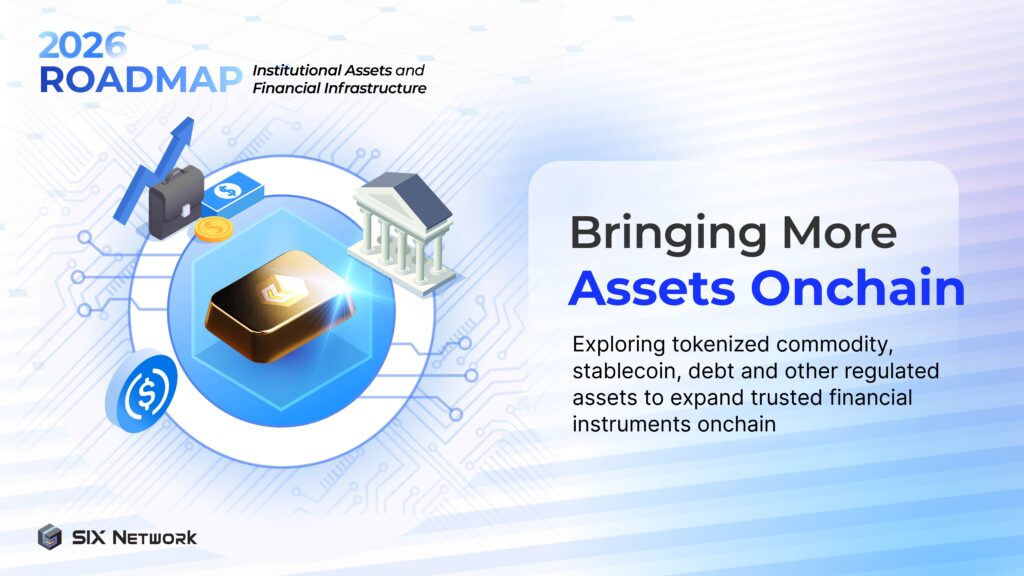
Bringing More Assets On Chain

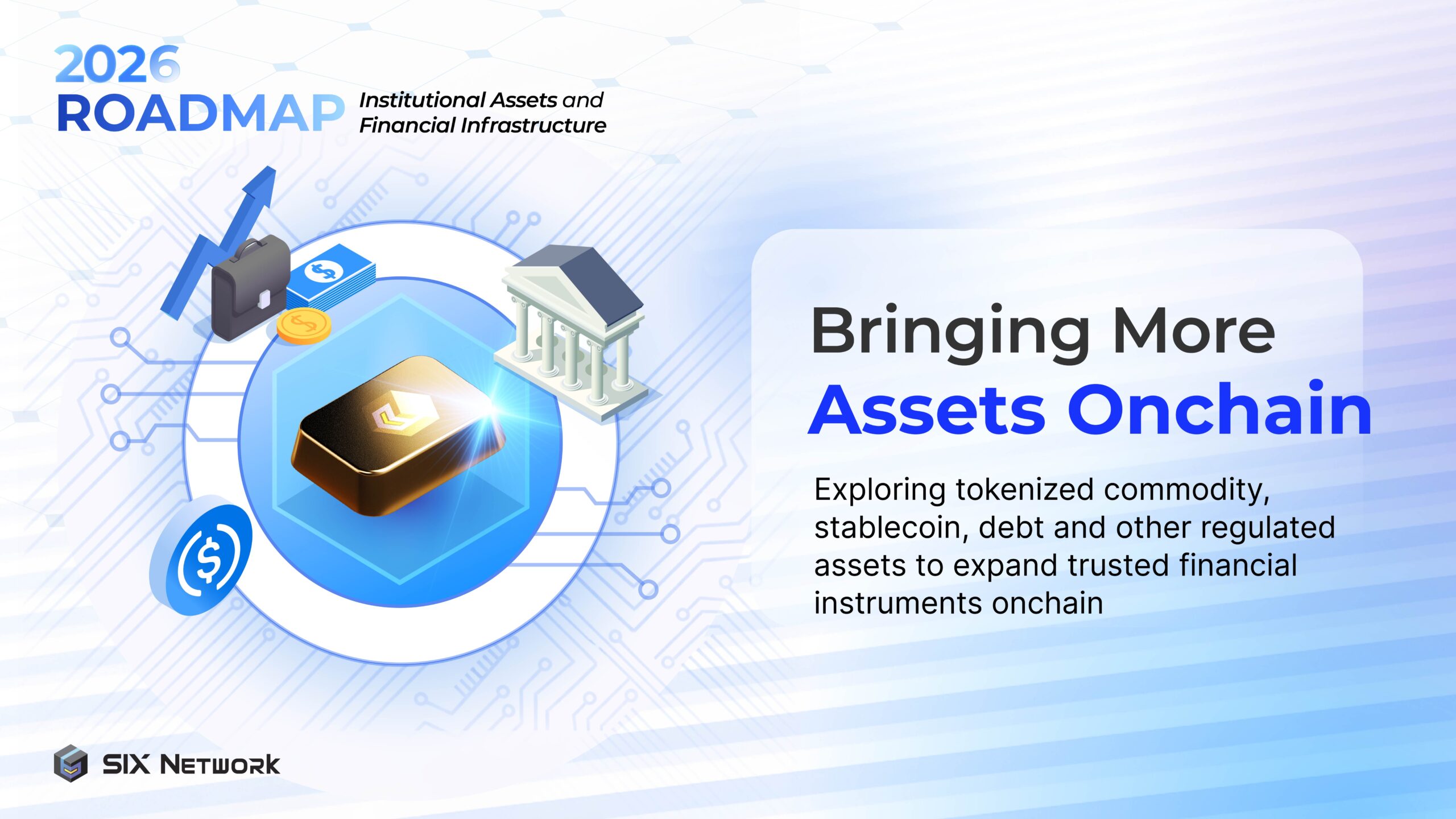
Beyond developing institutional-grade assets, another key initiative for SIX Network in 2026 is to expand the diversity of assets that can be brought on chain. This direction aims to support broader use cases and align with long-term market demand.


Currently, SIX Network is exploring the feasibility of onboarding various asset classes in collaboration with regional financial institutions. These include regulated asset types such as commodities, bonds, stablecoins, and equities, assets that play important roles in financial markets and are widely recognized by both investors and institutions.


From Single Asset Focus to a Multi-Asset Ecosystem


Bringing these assets onto SIX Protocol represents a continuation from earlier implementations, particularly in real estate, toward a more diversified ecosystem capable of supporting a wider range of asset types.


One example of an asset class under consideration is gold, which remains one of the most globally trusted stores of value. Central banks around the world hold gold as part of their reserves, and it has long served as a reliable long-term asset in financial markets. Introducing assets like gold onto blockchain connects globally trusted asset classes with digital infrastructure.


This approach creates opportunities for assets that play significant roles in the global economy to operate more seamlessly within blockchain-based systems.


Enabling New Use Cases Across Asset Classes


In the long term, tokenized assets on SIX Protocol may serve as the foundation for a wider range of applications, including settlement processes, collateral structures, and participation in the evolving digital financial landscape.


This direction reflects the ongoing development of SIX Protocol toward infrastructure that can support a broader spectrum of asset types, while enabling new use cases that bridge real-world assets with digital systems.


• Read the full SIX Network Roadmap 2026: Click

• Join our Roadmap 2026 campaign: Join Now

⎯⎯⎯⎯⎯⎯⎯⎯⎯⎯⎯⎯⎯⎯⎯⎯⎯⎯⎯⎯⎯⎯⎯⎯⎯⎯⎯⎯⎯⎯⎯⎯

Disclaimer:

1.This article is intended for informational purposes only. Please conduct your own research before making any investment decisions related to cryptocurrencies 2. Cryptocurrency and digital token involve high risk; investors may lose all investment money and should study information carefully and make investments according to their own risk profile.


Don’t miss out follow us at:

Warisara Thepsiri
Warisara Thepsiri

Experience the magic of Blockchain with SIX Network!

Related Posts

SIX Network Announces Strategic Partnership with Piggycell to Advance RWA Between Thailand and South Korea

SIX Network ประกาศความร่วมมือเชิงกลยุทธ์กับ Piggycell เพื่อร่วมผลักดัน RWA ระหว่างไทยและเกาหลีใต้

SIX Network ประกาศความร่วมมือเชิงกลยุทธ์กับ Piggycell บริษัทจากเกาหลีใต้ที่พัฒนาโครงสร้างพื้นฐาน Real-World Asset สำหรับพลังงานเคลื่อนที่ ภายใต้แนวคิด RWA Infrastructure for Mobile โดย Piggycell นำพลังงานในโลกจริง มาเชื่อมต่อกับระบบ Web3 ผ่าน DePIN

Read More

Increasing Institutional Asset Tokenization on SIX Protocol

Increasing Institutional Asset Tokenization on SIX Protocol

Expanding Institutional Assets On Chain

​​Advancing Real-World Financial Infrastructure

As the infrastructure of SIX Protocol continues to mature, the next phase of development focuses on moving beyond project-based asset tokenization toward larger, institutional-grade assets with structures aligned to market standards.

Previous deployments have already demonstrated that tokenizing real-world assets, such as real estate, is not only feasible but can be implemented in real business environments. These early use cases serve as a foundation for expanding into more complex asset structures that meet the needs of institutional participants.


From Use Cases to Institutional-Grade Assets


The next stage of on-chain asset development is centered on transitioning from individual projects to institutional-grade assets that can operate within real organizational and financial contexts.


SIX Network has already introduced institutional-level assets onto the blockchain through projects such as SiriHub2, a tokenized asset backed by real estate. This project demonstrates the practical viability of bringing institutional assets on-chain.


Building on this foundation, SIX aims to expand toward assets with clearer structures, higher credibility, and the ability to operate continuously at an organizational level, key characteristics required for institutional adoption.


Developing Assets Under Institutional Standards


Institutional-grade assets require more than simply being deployed on-chain.
They must be supported by clear governance structures, regulatory alignment,
and verifiable transparency. factors that are essential for acceptance at the institutional level.


In this context, asset development on SIX Protocol is designed to align with relevant regulatory frameworks and guidelines, including those set by regulatory authorities such as the SEC. This ensures that asset issuance and management can operate appropriately within legal and market standards.


This approach is not just about increasing the number of assets on-chain, but about enhancing the overall quality of assets to support real-world institutional use cases.


Strengthening the Ecosystem for the Next Phase of Growth

The objective for 2026 is to continuously expand the presence of institutional-grade assets on SIX Protocol, building an ecosystem that is both diverse and increasingly credible.


As institutional assets become a larger part of the network, they contribute to strengthening the overall system, enhancing user confidence, attracting strategic partners, and enabling broader use cases across the ecosystem.


This marks another important step in aligning SIX Protocol with the direction of the global RWA market, as it continues to evolve and expand.


• Read the full SIX Network Roadmap 2026: Click

• Join our Roadmap 2026 campaign: Join Now

⎯⎯⎯⎯⎯⎯⎯⎯⎯⎯⎯⎯⎯⎯⎯⎯⎯⎯⎯⎯⎯⎯⎯⎯⎯⎯⎯⎯⎯⎯⎯⎯

Disclaimer:

1.This article is intended for informational purposes only. Please conduct your own research before making any investment decisions related to cryptocurrencies 2. Cryptocurrency and digital token involve high risk; investors may lose all investment money and should study information carefully and make investments according to their own risk profile.


Don’t miss out follow us at:

Warisara Thepsiri
Warisara Thepsiri

Experience the magic of Blockchain with SIX Network!

Related Posts

SIX Network Announces Strategic Partnership with Piggycell to Advance RWA Between Thailand and South Korea

SIX Network ประกาศความร่วมมือเชิงกลยุทธ์กับ Piggycell เพื่อร่วมผลักดัน RWA ระหว่างไทยและเกาหลีใต้

SIX Network ประกาศความร่วมมือเชิงกลยุทธ์กับ Piggycell บริษัทจากเกาหลีใต้ที่พัฒนาโครงสร้างพื้นฐาน Real-World Asset สำหรับพลังงานเคลื่อนที่ ภายใต้แนวคิด RWA Infrastructure for Mobile โดย Piggycell นำพลังงานในโลกจริง มาเชื่อมต่อกับระบบ Web3 ผ่าน DePIN

Read More

Expanding SIX Network into the Global RWA Market

Expanding SIX Network into the Global RWA Market

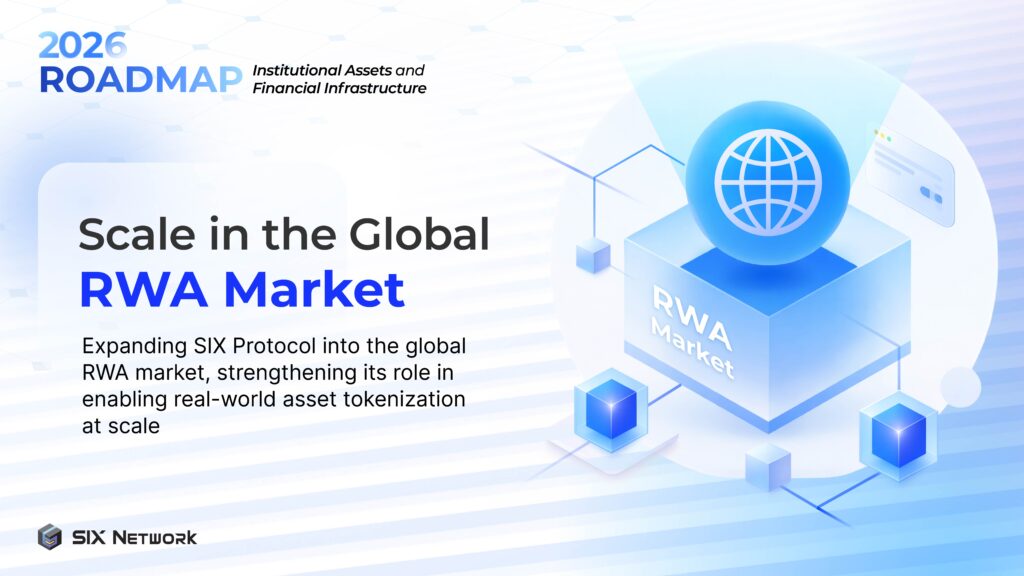
Scale in the Global RWA Market

​​Building Visible Value with THB 2.49 Billion in TVL


As outlined in our 2026 roadmap, SIX Network is moving forward with a clear direction to expand the role of SIX Network and SIX Protocol into the global RWA market. This builds on our continuous development of tokenization technology, alongside strategic collaborations to support bringing real-world assets onto blockchain infrastructure.


Today, SIX Protocol holds approximately THB 2.49 billion in total value locked (TVL), reflecting early-stage real-world adoption at a level where the market can begin to recognize and evaluate its potential.


The growth of the RWA market signals that we are on the right path

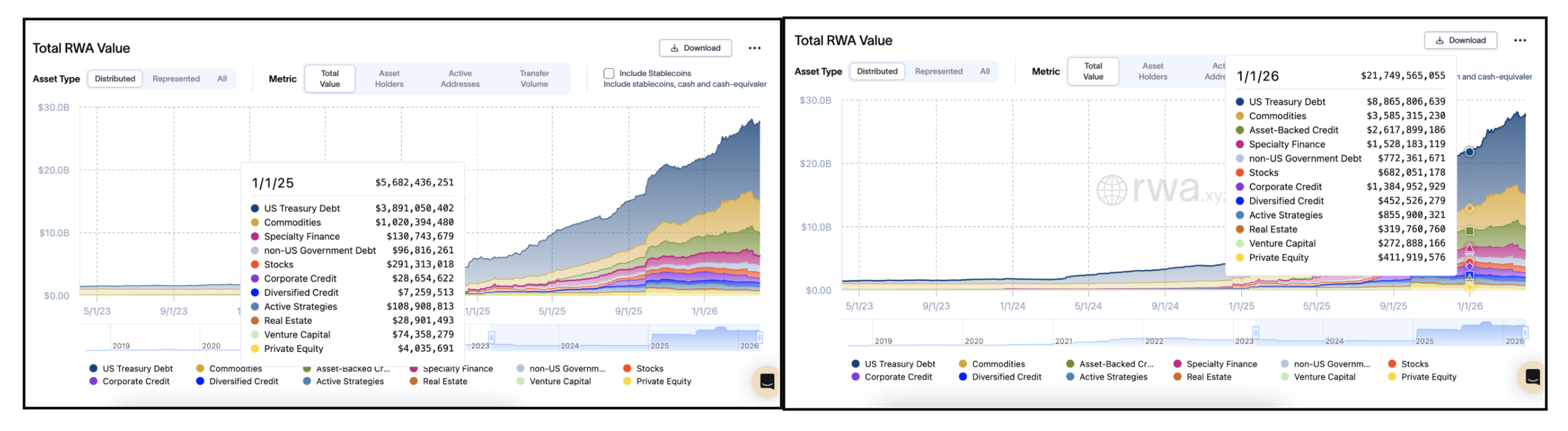
Growth of Total RWA Value on 1 Jan 2025 - 1 Jan 2026

Growth of Total RWA Value on 1 Jan 2025 – 1 Jan 2026


The chart above illustrates the growth of the RWA tokenization market based on data from RWA.xyz, a leading analytics platform tracking real-world asset tokenization.


Over the past few years, the market has experienced rapid expansion, reaching a total value of more than USD 26.89 billion and growing over fourfold within just one year.


This growth reflects increasing interest from both institutional players and a broader base of investors. More importantly, it signals a structural shift, where RWA tokenization is evolving into a key component of modern financial infrastructure, enabling the widespread integration of blockchain technology across real-world financial use cases.


This momentum is one of the key reasons SIX Network is expanding into the global RWA market, alongside continuously onboarding new asset types onto the protocol. The objective is not simply to increase on-chain asset value, but to focus on asset classes that are already trusted and understood globally, such as commodities, stablecoins, stocks, and other familiar financial instruments that institutional and global partners can easily recognize and adopt.


Currently, SIX Protocol supports over USD 90 million in on-chain assets, representing early traction in bringing real-world assets onto blockchain infrastructure. Based on this, the protocol has the potential to move toward the global Top 20 networks by total on-chain RWA value.


Expanding globally through ecosystem strength


The next phase of growth for SIX Protocol depends on its ability to develop on-chain assets that align with global market demand, while maintaining infrastructure that supports real-world enterprise use. When both asset quality and system design evolve together, they form the foundation for scalable global expansion.


At the same time, having assets that are recognized and trusted at a global level will strengthen confidence among investors and partners, driving growth across the broader ecosystem, not only at the protocol level, but also extending to SIX Token and Pas.ss as interconnected components of the network.


• Read the full SIX Network Roadmap 2026: Click

• Join our Roadmap 2026 campaign: Join Now


⎯⎯⎯⎯⎯⎯⎯⎯⎯⎯⎯⎯⎯⎯⎯⎯⎯⎯⎯⎯⎯⎯⎯⎯⎯⎯⎯⎯⎯⎯⎯⎯

Disclaimer:

1.This article is intended for informational purposes only. Please conduct your own research before making any investment decisions related to cryptocurrencies 2. Cryptocurrency and digital token involve high risk; investors may lose all investment money and should study information carefully and make investments according to their own risk profile.


Don’t miss out follow us at:

Warisara Thepsiri
Warisara Thepsiri

Experience the magic of Blockchain with SIX Network!

Related Posts

SIX Network Announces Strategic Partnership with Piggycell to Advance RWA Between Thailand and South Korea

SIX Network ประกาศความร่วมมือเชิงกลยุทธ์กับ Piggycell เพื่อร่วมผลักดัน RWA ระหว่างไทยและเกาหลีใต้

SIX Network ประกาศความร่วมมือเชิงกลยุทธ์กับ Piggycell บริษัทจากเกาหลีใต้ที่พัฒนาโครงสร้างพื้นฐาน Real-World Asset สำหรับพลังงานเคลื่อนที่ ภายใต้แนวคิด RWA Infrastructure for Mobile โดย Piggycell นำพลังงานในโลกจริง มาเชื่อมต่อกับระบบ Web3 ผ่าน DePIN

Read More

SIX Network ประกาศความร่วมมือกับ Selanet ผู้โครงสร้างพื้นฐานสำหรับ AI Agents

SIX Network ประกาศความร่วมมือกับ Selanet ผู้โครงสร้างพื้นฐานสำหรับ AI Agents

​​SIX Network Announces Partnership with Selanet, AI Agent Infrastructure Developer, to Drive Web3 Ecosystem Growth

SIX Network ประกาศความร่วมมือกับ Selanet ผู้พัฒนา Infrastructure สำหรับ AI Agents เพื่อขับเคลื่อน Web3 Ecosystem


เรามีความยินดีอย่างยิ่งที่ได้ประกาศความร่วมมือกับ Selanet ผู้พัฒนาโครงสร้างพื้นฐานดิจิทัลที่ช่วยให้ AI agents สามารถทำงานบนเว็บไซต์ต่าง ๆ ได้อัตโนมัติและเชื่อถือได้ในระดับ production โดย Selanet ช่วยให้ AI agents สามารถเข้าถึง ทำความเข้าใจ และดำเนินการบนเว็บไซต์จริงได้ ไม่ว่าจะเป็นการโต้ตอบกับระบบหรือการทำ workflow ต่าง ๆ แบบ end to end


ความร่วมมือครั้งนี้สะท้อนการนำ AI agents เข้ามาเป็นส่วนหนึ่งของโครงสร้างพื้นฐาน เพื่อขับเคลื่อน Web3 ecosystem ในระดับที่ลึกยิ่งขึ้น


จาก Tool สู่ Infrastructure: วิสัยทัศน์ร่วมของ AI และ Blockchain


การร่วมมือกันในครั้งนี้แสดงให้เห็นถึงการนำ AI agents มาทำงานจริงบน infrastructure ระดับ production ซึ่งสอดคล้องกับทิศทางของ SIX Network ที่กำลังศึกษาและพัฒนาแนวทางการผสาน AI เข้ากับ blockchain เพื่อสร้างระบบที่ชาญฉลาดและขับเคลื่อนด้วยข้อมูลมากยิ่งขึ้น


Selanet แสดงให้เห็นถึงแนวทางของการสร้าง execution layer สำหรับ AI agents ที่สามารถเชื่อมต่อเข้ากับระบบดิจิทัลและ ecosystem ของ Web3 ได้ในทางปฏิบัติ


ความร่วมมือครั้งนี้เปิดโอกาสให้ SIX Network สามารถนำแนวคิดของ AI-driven infrastructure มาประยุกต์ใช้ในการออกแบบ ecosystem และพัฒนากลไกต่าง ๆ เช่น การออกแบบ incentive structure การวางกลยุทธ์การเติบโตของ community และการพัฒนาโปรแกรมที่อิงจากพฤติกรรมผู้ใช้งานจริง


SIX Network อยู่ระหว่างการศึกษาแนวทางในการนำ AI agents มาใช้ร่วมกับ ecosystem และ community initiatives ที่กำลังจะเกิดขึ้น


โปรดติดตามในเร็ว ๆ นี้

⎯⎯⎯⎯⎯⎯⎯⎯⎯⎯⎯⎯⎯⎯⎯⎯⎯⎯⎯⎯⎯⎯⎯⎯⎯⎯⎯⎯⎯⎯⎯⎯

Disclaimer:

1.This article is intended for informational purposes only. Please conduct your own research before making any investment decisions related to cryptocurrencies 2. Cryptocurrency and digital token involve high risk; investors may lose all investment money and should study information carefully and make investments according to their own risk profile.


Don’t miss out follow us at:

Warisara Thepsiri
Warisara Thepsiri

Experience the magic of Blockchain with SIX Network!

Related Posts

SIX Network Announces Strategic Partnership with Piggycell to Advance RWA Between Thailand and South Korea

SIX Network ประกาศความร่วมมือเชิงกลยุทธ์กับ Piggycell เพื่อร่วมผลักดัน RWA ระหว่างไทยและเกาหลีใต้

SIX Network ประกาศความร่วมมือเชิงกลยุทธ์กับ Piggycell บริษัทจากเกาหลีใต้ที่พัฒนาโครงสร้างพื้นฐาน Real-World Asset สำหรับพลังงานเคลื่อนที่ ภายใต้แนวคิด RWA Infrastructure for Mobile โดย Piggycell นำพลังงานในโลกจริง มาเชื่อมต่อกับระบบ Web3 ผ่าน DePIN

Read More

​​SIX Network Announces Partnership with Selanet AI Infrastructure

​​SIX Network Announces Partnership with Selanet AI Infrastructure

​​SIX Network Announces Partnership with Selanet, AI Agent Infrastructure Developer, to Drive Web3 Ecosystem Growth

​​SIX Network Partners with Selanet, AI Agent Infrastructure Developer, to Drive Web3 Ecosystem Growth


We are pleased to announce our collaboration with Selanet, a digital infrastructure developer that enables AI agents to operate autonomously and reliably across websites at a production level. Selanet enables AI agents to access, understand, and execute actions on real-world websites, including interacting with systems and completing end to end workflows.


This partnership reflects the integration of AI agents as part of the infrastructure layer, contributing to the advancement of the Web3 ecosystem at a deeper level.


From Tool to Infrastructure: A Shared Vision of AI and Blockchain


This collaboration demonstrates the real-world deployment of AI agents on production-grade infrastructure, aligning with SIX Network’s direction in exploring and developing the integration of AI with blockchain to build more intelligent, data-driven systems.


Selanet represents an approach to building an execution layer for AI agents that can connect with digital systems and the Web3 ecosystem in practical use cases.


This partnership also creates an opportunity for SIX Network to apply AI-driven infrastructure concepts in ecosystem design and mechanism development, including incentive structures, community growth strategies, and programs based on real user behavior.


What’s Next

SIX Network is currently exploring how AI agents can be integrated into upcoming ecosystem and community initiatives.


Stay tuned.

⎯⎯⎯⎯⎯⎯⎯⎯⎯⎯⎯⎯⎯⎯⎯⎯⎯⎯⎯⎯⎯⎯⎯⎯⎯⎯⎯⎯⎯⎯⎯⎯

Disclaimer:

1.This article is intended for informational purposes only. Please conduct your own research before making any investment decisions related to cryptocurrencies 2. Cryptocurrency and digital token involve high risk; investors may lose all investment money and should study information carefully and make investments according to their own risk profile.


Don’t miss out follow us at:

Warisara Thepsiri
Warisara Thepsiri

Experience the magic of Blockchain with SIX Network!

Related Posts

SIX Network Announces Strategic Partnership with Piggycell to Advance RWA Between Thailand and South Korea

SIX Network ประกาศความร่วมมือเชิงกลยุทธ์กับ Piggycell เพื่อร่วมผลักดัน RWA ระหว่างไทยและเกาหลีใต้

SIX Network ประกาศความร่วมมือเชิงกลยุทธ์กับ Piggycell บริษัทจากเกาหลีใต้ที่พัฒนาโครงสร้างพื้นฐาน Real-World Asset สำหรับพลังงานเคลื่อนที่ ภายใต้แนวคิด RWA Infrastructure for Mobile โดย Piggycell นำพลังงานในโลกจริง มาเชื่อมต่อกับระบบ Web3 ผ่าน DePIN

Read More

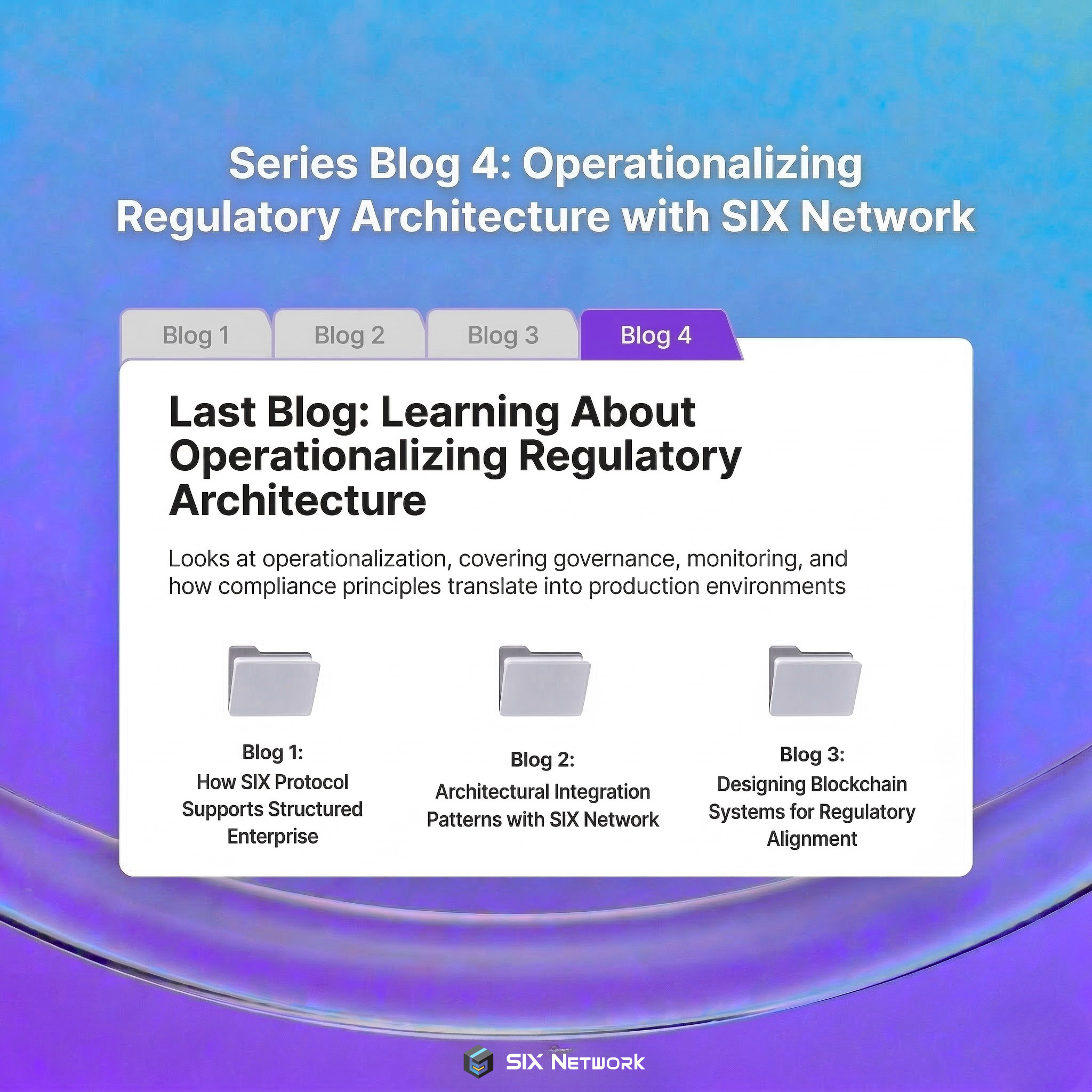
Series Blog 4: Operationalizing Regulatory Architecture

Series Blog 4: Operationalizing Regulatory Architecture

Series Blog 4 Operationalizing Regulatory Architecture with SIX Network

Understanding regulatory principles is only the first step. The more difficult challenge lies in operationalizing those principles within live systems.


Moving from compliance design to production deployment requires coordination between architecture, legal, operations, and security teams.


Embedding Compliance into Operational Workflows


Rather than treating compliance as a reporting function, mature architectures embed regulatory controls into transaction workflows.


Examples include:

• Multi-level approval processes before transaction finalization

• Automated logging of authorization events

• Clearly defined retention and archival policies

• Defined escalation paths for exceptional cases


These controls are implemented primarily in enterprise application logic and governance frameworks. Blockchain serves as a verifiable execution and recording layer.


SIX Garage and related tooling can assist in structuring asset management and permission workflows, but they operate within broader governance systems defined by the organization.


Monitoring and Continuous Oversight


Production systems require observability. Compliance does not end at deployment; it requires continuous oversight.


Architectural monitoring typically covers:

• Transaction latency and failure rates

• Role misuse or unauthorized access attempts

• Data consistency across on-chain and off-chain components

• Audit trail completeness


SIX Network infrastructure can be integrated into existing monitoring frameworks, allowing blockchain operations to be managed alongside other enterprise systems.


From Policy to Implementation


Regulatory frameworks such as GDPR, HIPAA, SOX, or AML/KYC define principles. Implementation varies by jurisdiction and organization.


No protocol can automatically guarantee compliance across all contexts. Instead, infrastructure should provide flexibility and traceability that enable organizations to implement their own compliance interpretations.


SIX Network’s approach emphasizes architectural support rather than automated regulatory guarantees.


Conclusion


Enterprise blockchain deployment in regulated environments requires architectural rigor, governance clarity, and operational discipline.


SIX Network’s standards-based protocol and supporting tools are designed to align with these enterprise requirements, not to replace them.


By approaching integration and compliance as architectural challenges rather than marketing features, organizations can move toward sustainable, production-ready blockchain adoption.

⎯⎯⎯⎯⎯⎯⎯⎯⎯⎯⎯⎯⎯⎯⎯⎯⎯⎯⎯⎯⎯⎯⎯⎯⎯⎯⎯⎯⎯⎯⎯⎯

Disclaimer:

1.This article is intended for informational purposes only. Please conduct your own research before making any investment decisions related to cryptocurrencies 2. Cryptocurrency and digital token involve high risk; investors may lose all investment money and should study information carefully and make investments according to their own risk profile.


Don’t miss out follow us at:

Warisara Thepsiri
Warisara Thepsiri

Experience the magic of Blockchain with SIX Network!

Related Posts

SIX Network Announces Strategic Partnership with Piggycell to Advance RWA Between Thailand and South Korea

SIX Network ประกาศความร่วมมือเชิงกลยุทธ์กับ Piggycell เพื่อร่วมผลักดัน RWA ระหว่างไทยและเกาหลีใต้

SIX Network ประกาศความร่วมมือเชิงกลยุทธ์กับ Piggycell บริษัทจากเกาหลีใต้ที่พัฒนาโครงสร้างพื้นฐาน Real-World Asset สำหรับพลังงานเคลื่อนที่ ภายใต้แนวคิด RWA Infrastructure for Mobile โดย Piggycell นำพลังงานในโลกจริง มาเชื่อมต่อกับระบบ Web3 ผ่าน DePIN

Read More

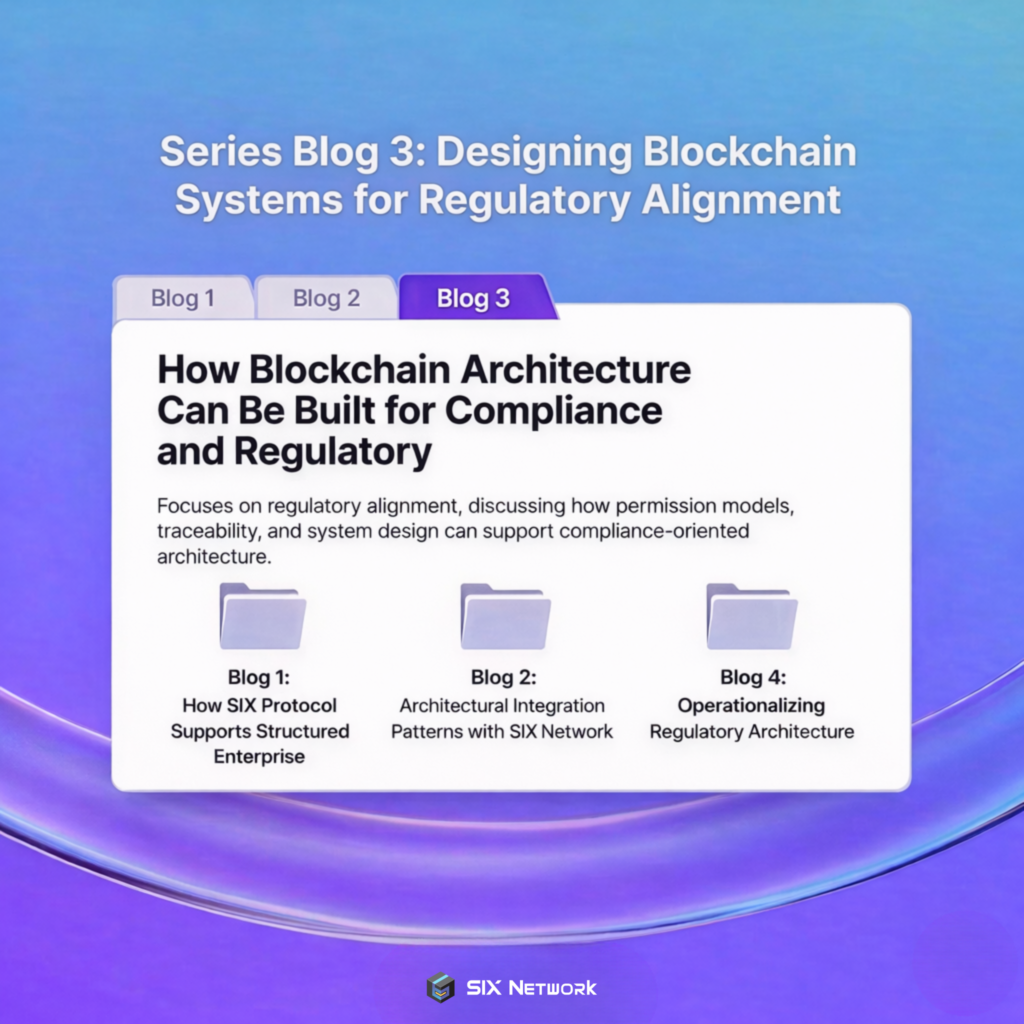
Series Blog 3: Designing Blockchain for Regulatory Alignment

Series Blog 3: Designing Blockchain for Regulatory Alignment

Series Blog 3 Designing Blockchain Systems for Regulatory Alignment

Enter to Blog 3: How Blockchain Architecture Can Be Built for Compliance and Regulatory


Compliance concerns often surface early in blockchain discussions. Questions about immutability, data protection, and auditability frequently delay adoption decisions.


However, many compliance challenges arise not from blockchain itself, but from incomplete architectural design. Regulatory alignment is rarely achieved through features alone. It requires deliberate system partitioning and governance modeling.


This article explores how compliance can be approached as an architectural principle rather than a reactive requirement.


Separation of On-Chain and Off-Chain Data

One of the most common misconceptions is that all operational data must reside on-chain. In regulated environments, this is rarely appropriate.


A structured architecture typically separates:

• Transaction proofs and hashes (on-chain)

• Sensitive or personal data (off-chain, within controlled databases)


Blockchain functions as an integrity and verification layer rather than a primary data repository.


SIX Protocol can support this model because it does not impose a rigid data storage architecture. Organizations retain flexibility in determining what information is recorded on-chain.


Permissioned Control and Identity Mapping


Regulatory frameworks often require clear attribution of actions. This means system architecture must map enterprise identity management systems to blockchain-level roles.


Permissioned models allow organizations to define who can initiate, approve, or view specific transactions. However, identity verification and access governance remain enterprise responsibilities.


SIX Protocol’s permission structures and traceable transaction metadata can support this alignment, but compliance ultimately depends on governance processes and audit design.


Auditability Without Overexposure


Another common concern involves transparency. Public blockchains expose transaction data broadly, which may conflict with confidentiality requirements.


Architectural strategies such as encryption, role-based access control, and metadata minimization allow organizations to maintain auditability without disclosing unnecessary information.


The objective is controlled transparency, providing regulators and auditors with verifiable records while limiting exposure of sensitive business data.


Complete Your Design Blockchain Systems 


Compliance should not be treated as a secondary checklist applied after system deployment. It must inform architectural decisions from the beginning.


SIX Protocol provides technical capabilities, permission models, traceability, and integration flexibility that can support compliance-oriented design. However, regulatory alignment is achieved through thoughtful system architecture and operational governance.


In the final article, we explore practical considerations for moving from compliance design principles to operational deployment.


────────────────────────────────────


Learn more about SIX Network

Website l Telegram l Twitter l Facebook l Discord l Medium

⎯⎯⎯⎯⎯⎯⎯⎯⎯⎯⎯⎯⎯⎯⎯⎯⎯⎯⎯⎯⎯⎯⎯⎯⎯⎯⎯⎯⎯⎯⎯⎯

Disclaimer:

1.This article is intended for informational purposes only. Please conduct your own research before making any investment decisions related to cryptocurrencies 2. Cryptocurrency and digital token involve high risk; investors may lose all investment money and should study information carefully and make investments according to their own risk profile.


Don’t miss out follow us at:

Warisara Thepsiri
Warisara Thepsiri

Experience the magic of Blockchain with SIX Network!

Related Posts

SIX Network Announces Strategic Partnership with Piggycell to Advance RWA Between Thailand and South Korea

SIX Network ประกาศความร่วมมือเชิงกลยุทธ์กับ Piggycell เพื่อร่วมผลักดัน RWA ระหว่างไทยและเกาหลีใต้

SIX Network ประกาศความร่วมมือเชิงกลยุทธ์กับ Piggycell บริษัทจากเกาหลีใต้ที่พัฒนาโครงสร้างพื้นฐาน Real-World Asset สำหรับพลังงานเคลื่อนที่ ภายใต้แนวคิด RWA Infrastructure for Mobile โดย Piggycell นำพลังงานในโลกจริง มาเชื่อมต่อกับระบบ Web3 ผ่าน DePIN

Read More

Series Blog 2: Architectural Integration Patterns with SIX Network

Series Blog 2: Architectural Integration Patterns with SIX Network

Series Blog2: Architectural Integration Patterns with SIX Network

Enter to Blog 2: Architectural Integration Patterns with SIX Network


In the previous article, we discussed how standards alignment, particularly EVM compatibility, reduces friction during enterprise blockchain adoption. However, compatibility alone does not solve integration complexity. What determines long-term success is architectural discipline.


Enterprise blockchain integration should not be treated as a feature implementation. It is an architectural extension of the existing system landscape. Without clear boundaries and integration patterns, blockchain components risk becoming tightly coupled to core systems, increasing operational risk and long-term maintenance cost.


This article examines architectural integration approaches that can be applied when working with SIX Protocol.


The Adapter Layer as an Architectural Boundary


One of the most reliable integration strategies in enterprise environments is the introduction of an adapter or middleware layer between core systems and blockchain infrastructure.


Instead of allowing ERP or CRM systems to directly interact with smart contracts, a controlled integration layer handles:

• Data transformation

• Transaction creation

• Signing and authorization

• Error handling and retry logic


This separation ensures that blockchain-specific concerns remain isolated. Core enterprise systems continue operating using their existing data models and workflows.

SIX Protocol’s standards-based execution environment allows this boundary to be implemented without proprietary constraints. Because it follows EVM standards, integration layers can leverage widely available libraries and established development patterns.


The objective is not simplification through abstraction alone, but architectural containment. Blockchain logic becomes a replaceable or evolvable component rather than a deeply embedded dependency.


Event-Driven Recording Without System Disruption


Many enterprise systems already rely on event-driven architectures. In such environments, blockchain should function as a recording or verification layer triggered by specific business events, rather than as the primary transaction processor.


For example, when an order is finalized or a compliance approval is completed, an event can be emitted internally. A blockchain integration service listens to these events and records relevant transaction metadata onchain.


This approach provides traceability without requiring the core business system to be redesigned. It also reduces operational risk, as business continuity does not depend on blockchain availability.


SIX Protocol supports this model because it does not require tightly coupled execution patterns. It can function as an external integrity layer that complements existing workflows.


Designing for Governance and Observability


Enterprise architects must consider governance and monitoring from the beginning. Blockchain components should integrate into existing operational monitoring frameworks rather than exist as isolated infrastructure.


Key architectural considerations typically include:

• How transaction states are monitored

• How failures are surfaced to operations teams

• How audit logs are correlated across systems

• How identity and permission models map between enterprise systems and blockchain roles


SIX Protocol’s permission capabilities and transaction traceability can support governance design, but they do not replace it. Governance remains an architectural responsibility.


Key Takeaway

Successful blockchain integration is less about adding distributed infrastructure and more about disciplined system design. Adapter layers, event-driven recording, and governance mapping are architectural tools, not product features.


SIX Network’s design choices allow these architectural strategies to be applied without introducing proprietary execution models or isolated tooling stacks.


In the next article, we shift focus from integration patterns to regulatory architecture and compliance-oriented design.


────────────────────────────────────

Learn more about SIX Network

Website l Telegram l Twitter l Facebook l Discord l Medium

⎯⎯⎯⎯⎯⎯⎯⎯⎯⎯⎯⎯⎯⎯⎯⎯⎯⎯⎯⎯⎯⎯⎯⎯⎯⎯⎯⎯⎯⎯⎯⎯

Disclaimer:

1.This article is intended for informational purposes only. Please conduct your own research before making any investment decisions related to cryptocurrencies 2. Cryptocurrency and digital token involve high risk; investors may lose all investment money and should study information carefully and make investments according to their own risk profile.


Don’t miss out follow us at:

Warisara Thepsiri
Warisara Thepsiri

Experience the magic of Blockchain with SIX Network!

Related Posts

SIX Network Announces Strategic Partnership with Piggycell to Advance RWA Between Thailand and South Korea

SIX Network ประกาศความร่วมมือเชิงกลยุทธ์กับ Piggycell เพื่อร่วมผลักดัน RWA ระหว่างไทยและเกาหลีใต้

SIX Network ประกาศความร่วมมือเชิงกลยุทธ์กับ Piggycell บริษัทจากเกาหลีใต้ที่พัฒนาโครงสร้างพื้นฐาน Real-World Asset สำหรับพลังงานเคลื่อนที่ ภายใต้แนวคิด RWA Infrastructure for Mobile โดย Piggycell นำพลังงานในโลกจริง มาเชื่อมต่อกับระบบ Web3 ผ่าน DePIN

Read More