fbpx

Series Blog 3: Designing Blockchain for Regulatory Alignment

Series Blog 3: Designing Blockchain for Regulatory Alignment

Series Blog 3 Designing Blockchain Systems for Regulatory Alignment

Enter to Blog 3: How Blockchain Architecture Can Be Built for Compliance and Regulatory


Compliance concerns often surface early in blockchain discussions. Questions about immutability, data protection, and auditability frequently delay adoption decisions.


However, many compliance challenges arise not from blockchain itself, but from incomplete architectural design. Regulatory alignment is rarely achieved through features alone. It requires deliberate system partitioning and governance modeling.


This article explores how compliance can be approached as an architectural principle rather than a reactive requirement.


Separation of On-Chain and Off-Chain Data

One of the most common misconceptions is that all operational data must reside on-chain. In regulated environments, this is rarely appropriate.


A structured architecture typically separates:

• Transaction proofs and hashes (on-chain)

• Sensitive or personal data (off-chain, within controlled databases)


Blockchain functions as an integrity and verification layer rather than a primary data repository.


SIX Protocol can support this model because it does not impose a rigid data storage architecture. Organizations retain flexibility in determining what information is recorded on-chain.


Permissioned Control and Identity Mapping


Regulatory frameworks often require clear attribution of actions. This means system architecture must map enterprise identity management systems to blockchain-level roles.


Permissioned models allow organizations to define who can initiate, approve, or view specific transactions. However, identity verification and access governance remain enterprise responsibilities.


SIX Protocol’s permission structures and traceable transaction metadata can support this alignment, but compliance ultimately depends on governance processes and audit design.


Auditability Without Overexposure


Another common concern involves transparency. Public blockchains expose transaction data broadly, which may conflict with confidentiality requirements.


Architectural strategies such as encryption, role-based access control, and metadata minimization allow organizations to maintain auditability without disclosing unnecessary information.


The objective is controlled transparency, providing regulators and auditors with verifiable records while limiting exposure of sensitive business data.


Complete Your Design Blockchain Systems 


Compliance should not be treated as a secondary checklist applied after system deployment. It must inform architectural decisions from the beginning.


SIX Protocol provides technical capabilities, permission models, traceability, and integration flexibility that can support compliance-oriented design. However, regulatory alignment is achieved through thoughtful system architecture and operational governance.


In the final article, we explore practical considerations for moving from compliance design principles to operational deployment.


────────────────────────────────────


Learn more about SIX Network

Website l Telegram l Twitter l Facebook l Discord l Medium

⎯⎯⎯⎯⎯⎯⎯⎯⎯⎯⎯⎯⎯⎯⎯⎯⎯⎯⎯⎯⎯⎯⎯⎯⎯⎯⎯⎯⎯⎯⎯⎯

Disclaimer:

1.This article is intended for informational purposes only. Please conduct your own research before making any investment decisions related to cryptocurrencies 2. Cryptocurrency and digital token involve high risk; investors may lose all investment money and should study information carefully and make investments according to their own risk profile.


Don’t miss out follow us at:

Warisara Thepsiri
Warisara Thepsiri

Experience the magic of Blockchain with SIX Network!

Related Posts

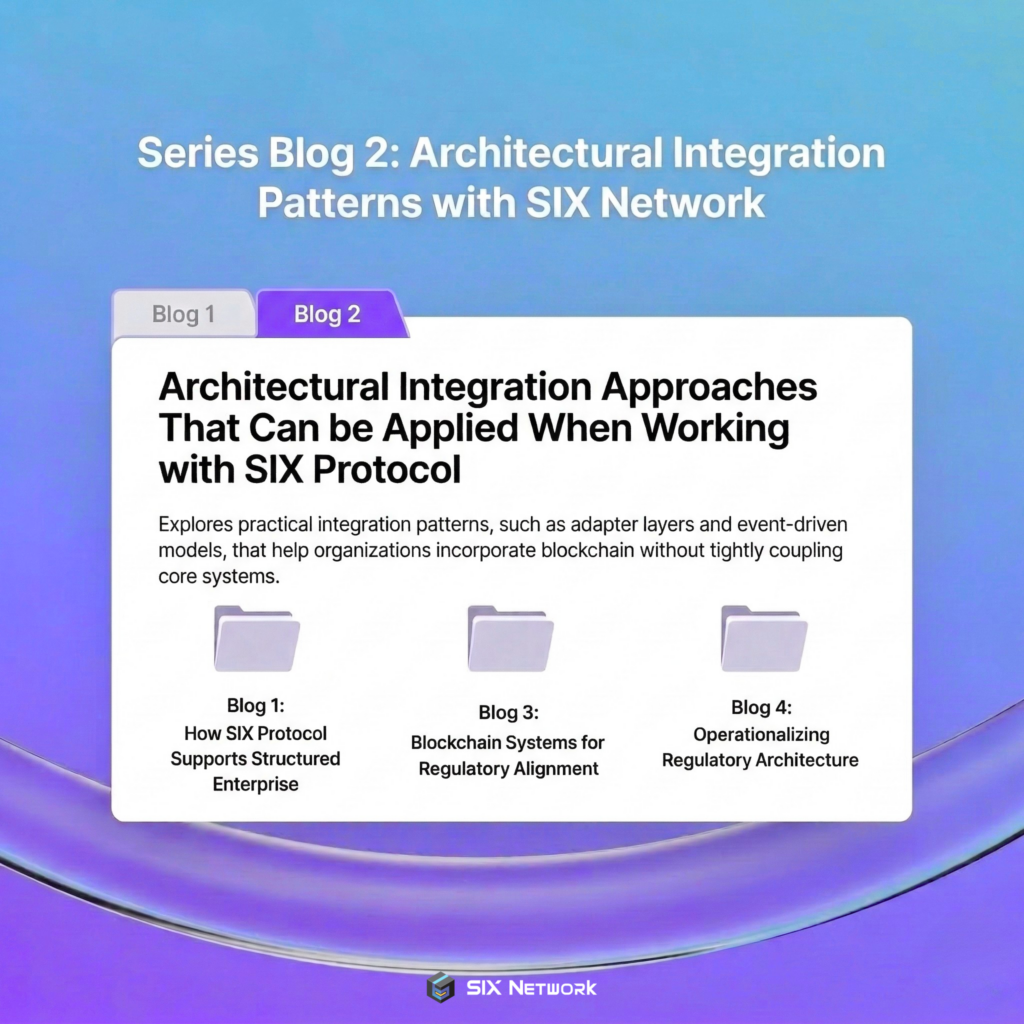
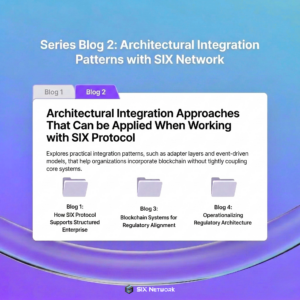
Series Blog 2: Architectural Integration Patterns with SIX Network

Series Blog 2: Architectural Integration Patterns with SIX Network

Series Blog2: Architectural Integration Patterns with SIX Network

Enter to Blog 2: Architectural Integration Patterns with SIX Network


In the previous article, we discussed how standards alignment, particularly EVM compatibility, reduces friction during enterprise blockchain adoption. However, compatibility alone does not solve integration complexity. What determines long-term success is architectural discipline.


Enterprise blockchain integration should not be treated as a feature implementation. It is an architectural extension of the existing system landscape. Without clear boundaries and integration patterns, blockchain components risk becoming tightly coupled to core systems, increasing operational risk and long-term maintenance cost.


This article examines architectural integration approaches that can be applied when working with SIX Protocol.


The Adapter Layer as an Architectural Boundary


One of the most reliable integration strategies in enterprise environments is the introduction of an adapter or middleware layer between core systems and blockchain infrastructure.


Instead of allowing ERP or CRM systems to directly interact with smart contracts, a controlled integration layer handles:

• Data transformation

• Transaction creation

• Signing and authorization

• Error handling and retry logic


This separation ensures that blockchain-specific concerns remain isolated. Core enterprise systems continue operating using their existing data models and workflows.

SIX Protocol’s standards-based execution environment allows this boundary to be implemented without proprietary constraints. Because it follows EVM standards, integration layers can leverage widely available libraries and established development patterns.


The objective is not simplification through abstraction alone, but architectural containment. Blockchain logic becomes a replaceable or evolvable component rather than a deeply embedded dependency.


Event-Driven Recording Without System Disruption


Many enterprise systems already rely on event-driven architectures. In such environments, blockchain should function as a recording or verification layer triggered by specific business events, rather than as the primary transaction processor.


For example, when an order is finalized or a compliance approval is completed, an event can be emitted internally. A blockchain integration service listens to these events and records relevant transaction metadata onchain.


This approach provides traceability without requiring the core business system to be redesigned. It also reduces operational risk, as business continuity does not depend on blockchain availability.


SIX Protocol supports this model because it does not require tightly coupled execution patterns. It can function as an external integrity layer that complements existing workflows.


Designing for Governance and Observability


Enterprise architects must consider governance and monitoring from the beginning. Blockchain components should integrate into existing operational monitoring frameworks rather than exist as isolated infrastructure.


Key architectural considerations typically include:

• How transaction states are monitored

• How failures are surfaced to operations teams

• How audit logs are correlated across systems

• How identity and permission models map between enterprise systems and blockchain roles


SIX Protocol’s permission capabilities and transaction traceability can support governance design, but they do not replace it. Governance remains an architectural responsibility.


Key Takeaway

Successful blockchain integration is less about adding distributed infrastructure and more about disciplined system design. Adapter layers, event-driven recording, and governance mapping are architectural tools, not product features.


SIX Network’s design choices allow these architectural strategies to be applied without introducing proprietary execution models or isolated tooling stacks.


In the next article, we shift focus from integration patterns to regulatory architecture and compliance-oriented design.


────────────────────────────────────

Learn more about SIX Network

Website l Telegram l Twitter l Facebook l Discord l Medium

⎯⎯⎯⎯⎯⎯⎯⎯⎯⎯⎯⎯⎯⎯⎯⎯⎯⎯⎯⎯⎯⎯⎯⎯⎯⎯⎯⎯⎯⎯⎯⎯

Disclaimer:

1.This article is intended for informational purposes only. Please conduct your own research before making any investment decisions related to cryptocurrencies 2. Cryptocurrency and digital token involve high risk; investors may lose all investment money and should study information carefully and make investments according to their own risk profile.


Don’t miss out follow us at:

Warisara Thepsiri
Warisara Thepsiri

Experience the magic of Blockchain with SIX Network!

Related Posts

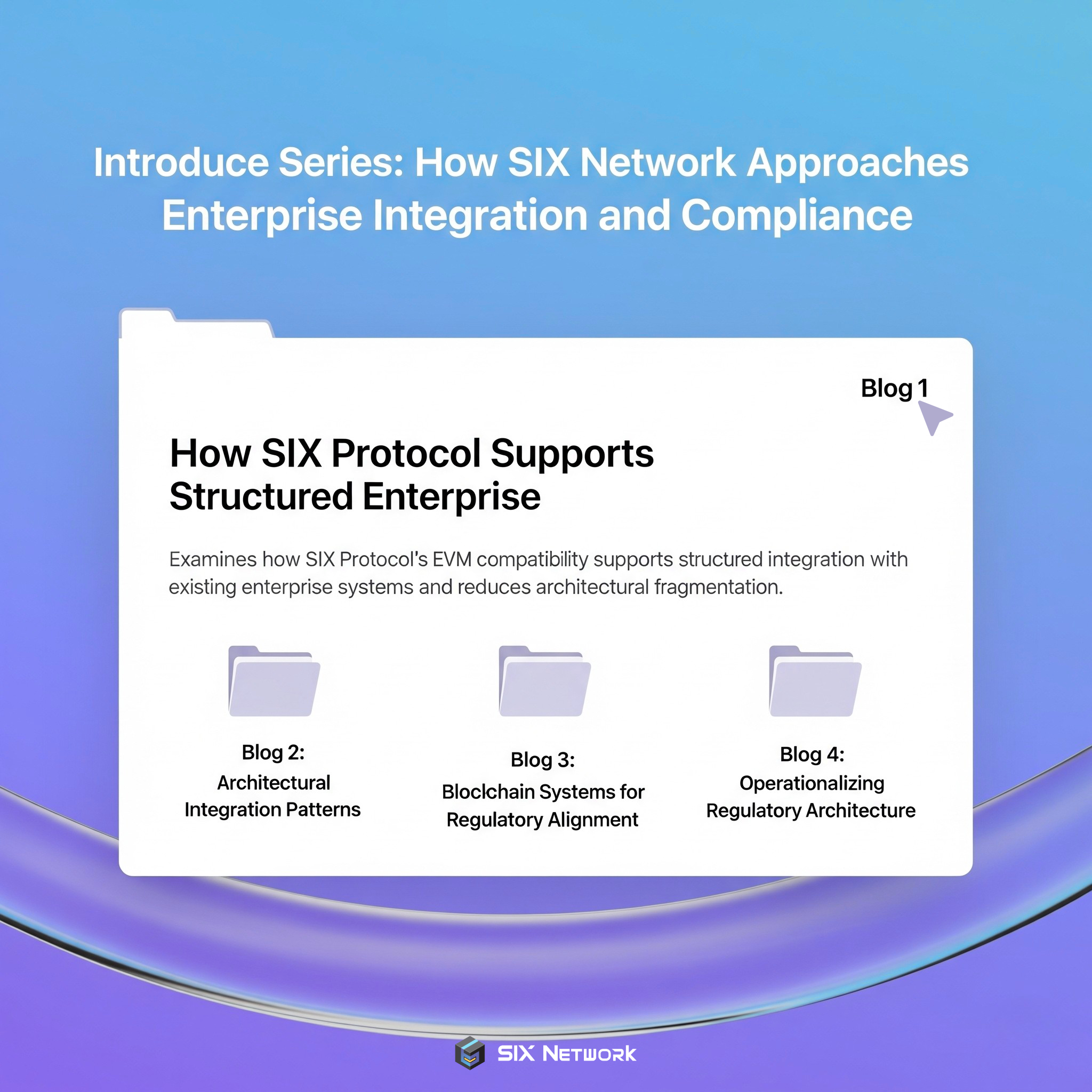
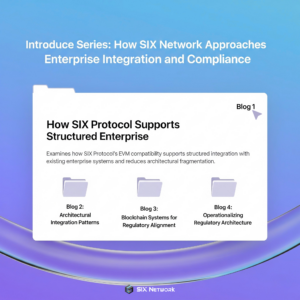
Introduce Series: How SIX Network Approaches Enterprise Integration and Compliance

Introduce Series: How SIX Network Approaches Enterprise Integration and Compliance

Introduce Series: How SIX Network Approaches Enterprise Integration and Compliance Blog 1

Enterprise blockchain adoption often slows down not because of the technology itself, but because of integration complexity and regulatory considerations. This four-part blog series explores how SIX Network approaches these challenges from an architectural perspective.


Blog 1 examines how SIX Protocol’s EVM compatibility supports structured integration with existing enterprise systems and reduces architectural fragmentation.

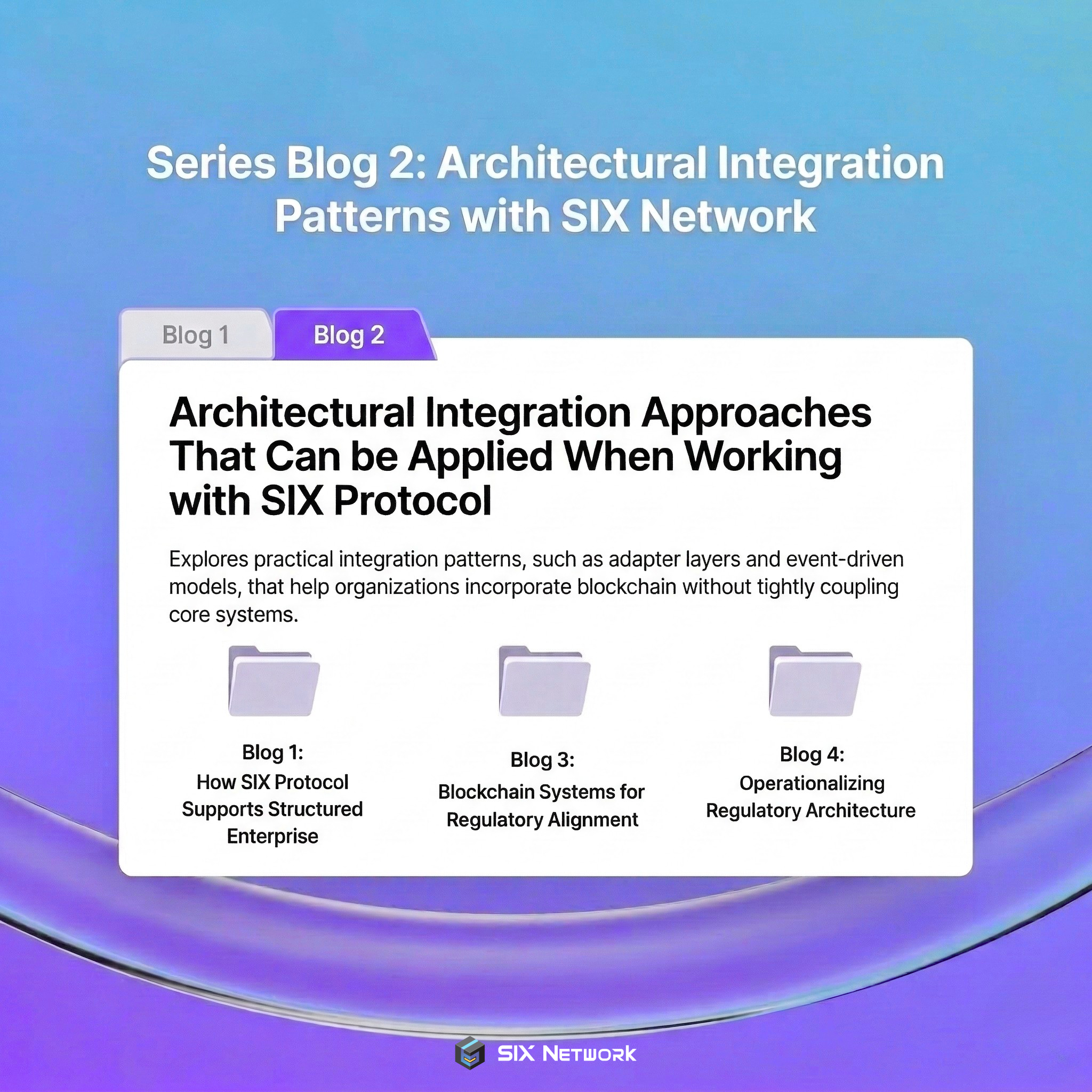
Blog 2 explores practical integration patterns, such as adapter layers and event-driven models, that help organizations incorporate blockchain without tightly coupling core systems.

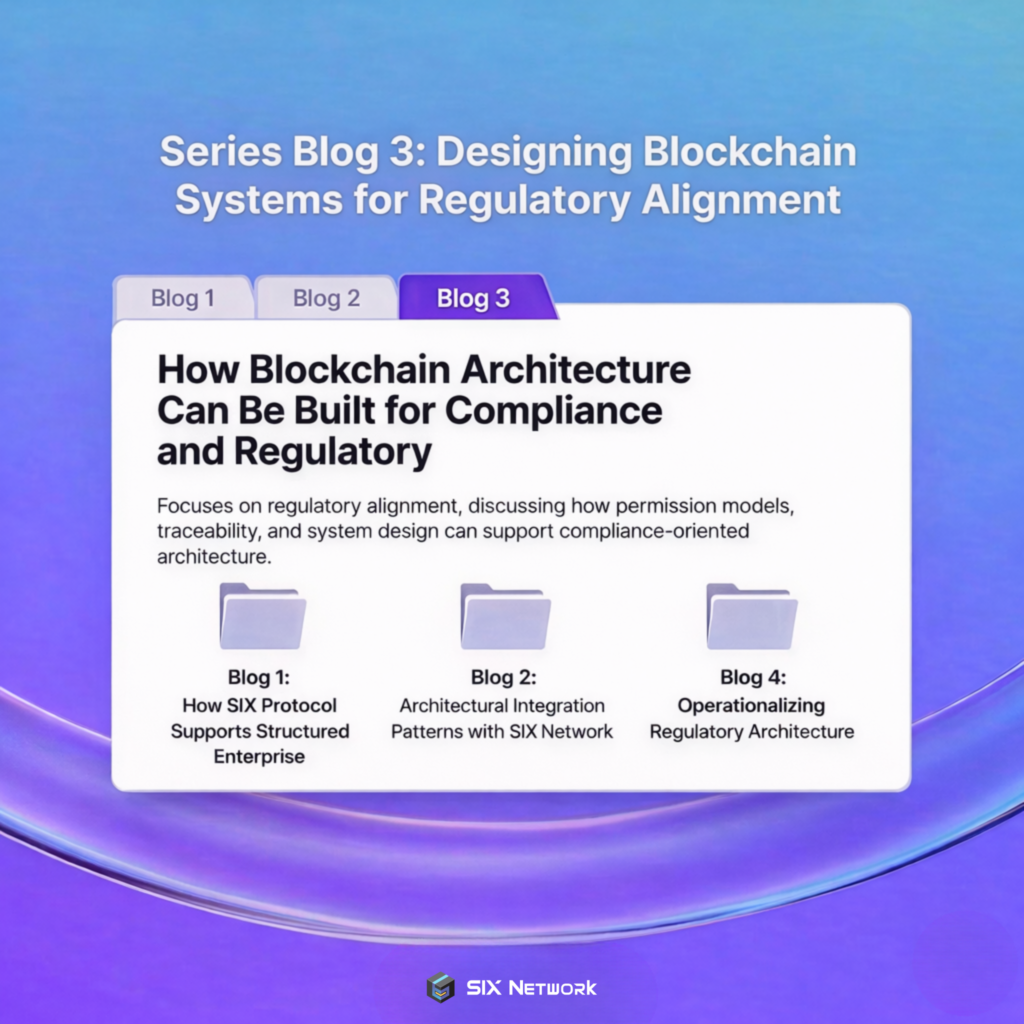
Blog 3 focuses on regulatory alignment, discussing how permission models, traceability, and system design can support compliance-oriented architecture.

Blog 4 looks at operationalization, covering governance, monitoring, and how compliance principles translate into production environments.


Throughout this series, we focus on architectural alignment, governance clarity, and standards-based design as foundations for sustainable enterprise blockchain adoption.


Blog 1

Overcoming Integration Complexity
Part 1: How SIX Protocol Supports Structured Enterprise Blockchain Integration

Enterprise blockchain integration is often perceived as complex and high-risk. In practice, the challenge rarely lies in blockchain technology alone. Instead, complexity arises from how blockchain systems interact with existing enterprise infrastructure, ERP platforms, CRM systems, identity frameworks, data governance models, and regulatory controls.


Many organizations successfully build proof-of-concept projects, but transitioning from pilot to production introduces architectural, operational, and compliance considerations that require structured planning.


SIX Protocol v4.0 was developed with these realities in mind. Rather than introducing a proprietary execution model, SIX Protocol aligns with established industry standards, particularly EVM compatibility. This architectural decision supports integration planning that is more predictable and aligned with existing development ecosystems.


This article is the first in a four-part series exploring how SIX Network approaches integration complexity and regulatory requirements in enterprise environments.


The Practical Role of EVM Compatibility

A common friction point in enterprise adoption is the introduction of new programming languages, tooling stacks, or execution environments. When platforms require proprietary development models, organizations must retrain teams or recruit new talent.


SIX Protocol supports the Ethereum Virtual Machine (EVM) at the core protocol level. Developers can write smart contracts in Solidity and use established development tools such as Hardhat and Truffle. This does not automatically shorten project timelines, but it reduces uncertainty by leveraging a mature ecosystem.


By aligning with widely adopted standards, organizations can reuse existing internal knowledge and external expertise. The decision to support EVM is therefore less about performance marketing and more about minimizing architectural fragmentation.


Supporting Enterprise Workflows Through the SIX Ecosystem

Beyond the protocol layer, SIX Network provides tools that support digital asset implementation.


SIX Garage offers capabilities for issuing and managing digital assets, including token configuration, permission management, and administrative oversight. These functions are designed to assist organizations that require structured governance over digital asset lifecycles.


Pas.ss provides a framework for managing digital privileges and engagement use cases. It integrates with non-custodial wallet models, allowing organizations to implement user-facing digital programs without requiring centralized custody structures.


These tools are not substitutes for enterprise system design. Rather, they serve as building blocks that organizations can integrate into broader digital strategies.


Integration as an Architectural Exercise

Effective enterprise blockchain integration requires separation of concerns. Business logic should remain independent from blockchain execution logic wherever possible. Middleware layers or API gateways can mediate communication between core enterprise systems and blockchain components.


SIX Protocol’s standards-based architecture allows such layering without requiring proprietary infrastructure dependencies. This enables organizations to define clear boundaries between existing systems and blockchain components.


Integration planning should typically include:

• Data flow analysis

• Identity and access control mapping

• Transaction approval workflows

• Monitoring and operational oversight

• Pre-production validation


SIX Network’s design approach supports these structured planning processes rather than replacing them.


Summary

Enterprise blockchain adoption becomes manageable when architectural alignment, governance considerations, and ecosystem compatibility are addressed early.


SIX Protocol’s EVM compatibility and the broader SIX ecosystem are designed to support structured integration planning rather than shortcut it. By relying on established standards and modular tooling, organizations can reduce integration uncertainty and build toward sustainable deployment models.


In the next article, we will examine practical integration patterns that can be applied within enterprise environments using SIX Network infrastructure.

────────────────────────────────────

Learn more about SIX Network

Website l Telegram l Twitter l Facebook l Discord l Medium

⎯⎯⎯⎯⎯⎯⎯⎯⎯⎯⎯⎯⎯⎯⎯⎯⎯⎯⎯⎯⎯⎯⎯⎯⎯⎯⎯⎯⎯⎯⎯⎯

Disclaimer:

1.This article is intended for informational purposes only. Please conduct your own research before making any investment decisions related to cryptocurrencies 2. Cryptocurrency and digital token involve high risk; investors may lose all investment money and should study information carefully and make investments according to their own risk profile.


Don’t miss out follow us at:

Warisara Thepsiri
Warisara Thepsiri

Experience the magic of Blockchain with SIX Network!

Related Posts

SIX Protocol Enterprise-Grade Infrastructure

SIX Protocol Enterprise-Grade Infrastructure

SIX Protocol Enterprise-Grade Infrastructure

Understanding Enterprise-Grade Infrastructure for Tokenized Assets with SIX Protocol v4.0

The market for digital assets backed by real-world value continues to expand across sectors such as government bonds, real estate, and commodities. However, market growth does not automatically translate into enterprise readiness.


For organizations, the key question is not what blockchain can do in theory, but what kind of infrastructure is appropriate for mission-critical systems, especially when security, regulatory oversight, and operational stability are involved.


🔎📖  This article explores what enterprise-grade infrastructure means in the context of tokenized assets and how SIX Protocol v4.0 is designed to support these requirements from an architectural perspective.


The Enterprise Challenge

Blockchains designed primarily for general-purpose or public experimentation may not be sufficient for high-value, regulated asset environments.


Real estate tokenization may require structured ownership models, access controls, and traceable approvals across jurisdictions. Commodity trading systems often demand transaction finality within predictable timeframes. Digital securities require auditability, investor protection mechanisms, and alignment with reporting standards.


If the underlying infrastructure cannot support these design considerations, organizations may encounter delayed settlement, unclear access control boundaries, or limited audit transparency. Over time, these constraints affect institutional confidence and long-term scalability.


Enterprise-grade infrastructure must therefore prioritize stability, governance capability, and architectural clarity, not performance alone.


SIX Protocol v4.0 in the Enterprise Context
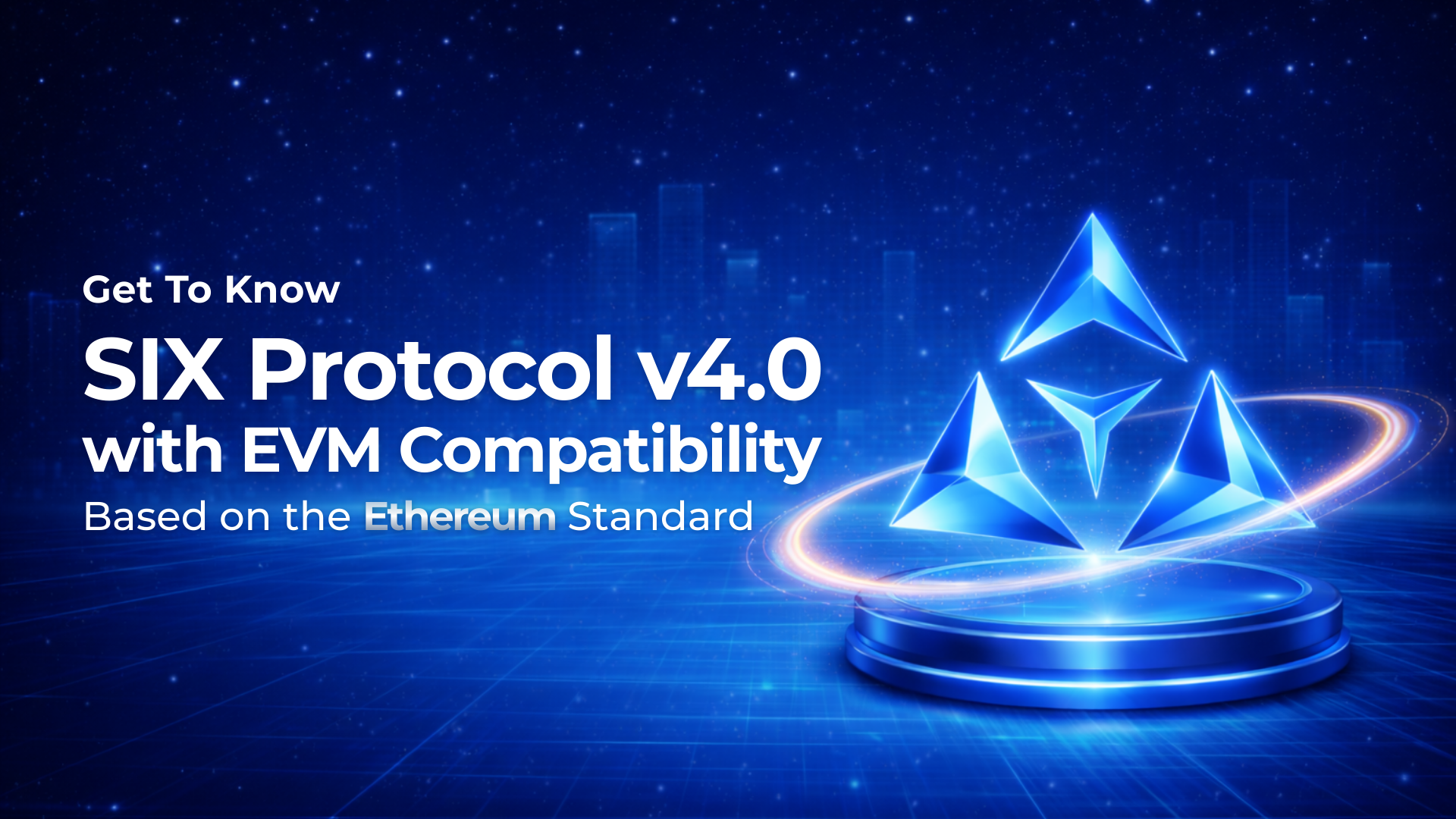
Get to Know SIX Protocol v4.0 with EVM Compatibility Based on the Ethereum Standard For Long-Term Business Development and Blockchain Expansion


SIX Protocol v4.0 was developed with enterprise tokenized asset environments in mind, particularly where real-world asset representation intersects with regulatory and operational requirements.


At the architectural level, the protocol supports EVM compatibility. This allows development teams to leverage established Ethereum tooling and standards, reducing dependency on proprietary execution environments. The intent is not simply familiarity, but architectural alignment with a widely adopted ecosystem.


The protocol operates using a Proof of Authority-based validator model, where validator nodes are managed within a structured network. This model supports predictable transaction validation and controlled governance, characteristics often required in institutional environments.


Rather than maximizing decentralization at all costs, the design balances performance, accountability, and operational reliability.


🔗 Learn more about SIX Protocol v4.0 
SIX Protocol v4.0 EVM Compatibility Based on the Ethereum Standard


Architecture Designed for Scalable Operations

SIX Protocol v4.0 uses a validator network operated under defined governance structures. This configuration reduces operational uncertainty and enables service-level considerations more aligned with enterprise expectations.


Transactions are grouped, validated, and finalized within short timeframes. For organizations handling asset transfers or financial workflows, reduced settlement latency contributes to improved capital efficiency and operational predictability.


The protocol also supports transaction traceability and structured data recording. Sensitive business or personal data does not need to reside fully on-chain. Instead, organizations can implement hybrid architectures where blockchain functions as an integrity and verification layer.


This architectural flexibility allows enterprises to design systems that align with data protection and internal governance policies.


Performance and Scalability

SIX Protocol is capable of processing transactions at a scale suitable for enterprise-level workloads under controlled network conditions. Transaction finality occurs within short intervals, supporting applications that require operational responsiveness.


Performance characteristics are influenced by network configuration and validator distribution, but the protocol is structured to support growing transaction volumes as enterprise adoption expands.


Fee structures are designed to remain stable and predictable relative to many public networks. For organizations managing large transaction volumes, cost predictability can be as important as raw throughput.


Security and Regulatory Alignment

At the application layer, SIX Protocol supports role-based access control, multi-signature authorization, and configurable transaction workflows. These capabilities allow organizations to embed internal approval processes directly into smart contract logic.

The protocol can integrate with external identity verification systems and supports transaction traceability required for compliance-oriented system design. In certain implementations, controlled transaction reversibility mechanisms can be configured to address specific legal or operational requirements.

However, regulatory compliance ultimately depends on organizational governance, policy design, and operational processes. Infrastructure can enable compliance-oriented architecture, but it does not replace regulatory responsibility.


Real-World Deployment Context

SIX Protocol has been used in digital real estate asset issuance scenarios requiring structured ownership and permission management.

In healthcare-related contexts, blockchain has functioned as a verification layer while sensitive patient data remains stored within secure internal systems. This hybrid model reflects a broader enterprise pattern: blockchain complements, rather than replaces, core systems.

These examples illustrate practical deployment models rather than theoretical capabilities.


Ongoing Development Direction

SIX Network continues to evolve its protocol with attention to privacy enhancements, cross-network interoperability, and scalability improvements.


Future development initiatives focus on strengthening architectural flexibility while maintaining governance clarity. Technologies such as advanced privacy techniques and network optimization mechanisms are under evaluation to support long-term enterprise use cases.


Conclusion

Enterprise-grade infrastructure for tokenized assets requires more than transaction speed. It must support governance structures, controlled access, traceability, and sustainable operational design.


SIX Protocol v4.0 reflects these considerations through standards alignment, a structured validator model, and supporting tools such as SIX Garage and Pas.ss that assist in digital asset lifecycle management.


For organizations evaluating blockchain infrastructure, architectural alignment, governance compatibility, and operational stability should weigh more heavily than performance claims alone.


SIX Network’s approach centers on supporting structured, responsible enterprise adoption rather than positioning blockchain as a standalone solution.

────────────────────────────────────

Learn more about SIX Network

Website l Telegram l Twitter l Facebook l Discord l Medium
⎯⎯⎯⎯⎯⎯⎯⎯⎯⎯⎯⎯⎯⎯⎯⎯⎯⎯⎯⎯⎯⎯⎯⎯⎯⎯⎯⎯⎯⎯⎯⎯

Disclaimer:

1.This article is intended for informational purposes only. Please conduct your own research before making any investment decisions related to cryptocurrencies 2. Cryptocurrency and digital token involve high risk; investors may lose all investment money and should study information carefully and make investments according to their own risk profile.


Don’t miss out follow us at:

Warisara Thepsiri
Warisara Thepsiri

Experience the magic of Blockchain with SIX Network!

Related Posts

SIX Protocol v4.0 EVM Compatibility Based on the Ethereum Standard

SIX Protocol v4.0 EVM Compatibility Based on the Ethereum Standard

Get to Know SIX Protocol v4.0 with EVM Compatibility Based on the Ethereum Standard For Long-Term Business Development and Blockchain Expansion

For Long Term Business Development and Blockchain Expansion

Many businesses are beginning to view blockchain as a foundational infrastructure for the future. This includes digital assets, payment systems, token issuance, and data management that requires transparency.


The key question is which network an organization should choose to support long term growth and connect smoothly with existing systems.


SIX Protocol v4.0 is developed with Full Native EVM Compatibility. This allows organizations to adapt their existing systems, teams, and expertise to blockchain more easily, while supporting business level scalability.


🔎📖 What EVM is and why supporting this standard matters for enterprises 

EVM, or Ethereum Virtual Machine, is the execution standard for Smart Contracts on the Ethereum network, which serves as a major foundation of today’s Web3 ecosystem. Many developers use Solidity and tools such as MetaMask to build blockchain applications.


When a network supports EVM Compatibility, organizations can use the same development tools and approaches as Ethereum without rebuilding everything from scratch.


For businesses, this directly impacts development time, cost, and risk. When infrastructure aligns with a widely accepted standard, implementation becomes more stable and sustainable.


In recent years, many networks have announced EVM support, but the level of completeness and stability varies. SIX Protocol v4.0 is designed to support EVM fully at the core architectural level.


Business Benefits

– Reduced development time
– Ability to leverage existing teams and expertise
– Scalability for future expansion
– Connectivity with the Ethereum ecosystem

Overview of SIX Protocol v4.0:

EVM Compatibility: Full Native support
Transaction Speed: More than 1000+ TPS
Development Tools: Full ecosystem compatibility
Enterprise Support: Dedicated team support


Guidelines for Success

Businesses planning to adopt blockchain should design their structure from the beginning to ensure stability and long term continuity.

Key considerations include:

– Smart Contract security
– Capacity to support a large number of users
– Data management and access control
– System testing before full deployment


Real-World Use Cases

Example 1: Enterprise Asset Tokenization

A real estate company plans to issue tokens representing ownership rights in assets. The system must support a large number of investors and integrate with standard wallets.


SIX Protocol v4.0 supports existing Smart Contract standards and can handle enterprise level transaction volumes with stability.


Example 2: Payment Infrastructure for Digital Businesses

A fintech company aims to build a blockchain based settlement system capable of handling high transaction volumes with sufficient speed for real-world usage.


SIX Protocol supports high throughput and integrates with existing development tools, enabling practical deployment at the business level.


────────────────────────────────────

Learn more about SIX Protocol v4.0

Elevate your digital infrastructure with blockchain aligned with the Ethereum standard.


Website l Telegram l Twitter l Facebook l Discord l Medium

⎯⎯⎯⎯⎯⎯⎯⎯⎯⎯⎯⎯⎯⎯⎯⎯⎯⎯⎯⎯⎯⎯⎯⎯⎯⎯⎯⎯⎯⎯⎯⎯

Disclaimer:

1.This article is intended for informational purposes only. Please conduct your own research before making any investment decisions related to cryptocurrencies 2. Cryptocurrency and digital token involve high risk; investors may lose all investment money and should study information carefully and make investments according to their own risk profile.


Don’t miss out follow us at:

Warisara Thepsiri
Warisara Thepsiri

Experience the magic of Blockchain with SIX Network!

Related Posts

Tokenized Real Estate: Structures & Use Case

Tokenized Real Estate: Structures & Use Case

SIX Network’s Infrastructure for Tokenized Real Estate Explore how we structure from real-world estate to onchain assets

SIX Network’s Infrastructure for Tokenized Real Estate

Explore how we structure from real-world estate to onchain assets 


SIX Network has developed an RWA tokenization infrastructure designed to support institutional-grade organizations, and naturally, this infrastructure also supports real estate assets.


This is achieved through the design of an end-to-end infrastructure that systematically connects: Law 👉🏼 Assets 👉🏼 Investors 👉🏼 Onchain


The core principle of this system is to ensure that Tokenized Real Estate can exist legally and function effectively in real economic terms, making it suitable for enterprise adoption and long-term investment use cases.


🔹 Components of Tokenized Real Estate on SIX Network


1️⃣ Proper linkage between real-world assets and tokens

Real estate assets entering the system are first structured with clear ownership frameworks (Ownership Structure). This ensures that the issued tokens accurately represent the rights, ownership, and economic value of the underlying real-world assets.


2️⃣ Structured support for Fractional Ownership

SIX Network’s system enables high-value real estate assets to be divided into fractional ownership units in a structured manner.

This helps to:

• Reduce investment size barriers

• Expand investor accessibility

• Create more flexible investment structures

While maintaining legal clarity over ownership rights.


3️⃣ Compliance-first Design, built in alignment with regulations

Tokenized Real Estate cannot scale without regulatory alignment.

SIX Network therefore designs its infrastructure with a Compliance-first approach at the core.

The system supports:

• Regulatory alignment

• Identity and rights verification (KYC, Verification)

• Transparency of asset-related data


4️⃣ Ready to integrate with DeFi and Onchain Finance

Once real estate assets are properly converted into onchain assets, these tokens can be further utilized within blockchain-based financial systems in the future.

For example:

• Used as collateral

• Transferred systematically

• Applied to the development of new onchain financial products


📝 Use Cases Developed by SIX Network


• Real Estate-Backed Token projects

SIX Network provides blockchain infrastructure for issuing investment-grade digital tokens backed by real estate assets. Asset values and data are recorded on the SIX Protocol, enabling enterprise-level RWA use cases with transparency and correctness.


• Tokenized Real Estate for private investment

SIX Network delivers blockchain infrastructure for tokenized real estate projects designed specifically for private investment. The system supports both token issuance and operational workflows on the SIX Protocol, tailored to private investment structures.


• Utility and privilege management for tokenized real estate projects

An additional layer of tokenization on SIX Network involves managing onchain utilities through Digital Pas.ss Privilege, which enables the administration of exclusive benefits and experiences for token holders, such as access to project-specific privileges or participation in events, systematically linked to tokenized assets on the SIX Protocol.


🔹 Why This Matters

Tokenized Real Estate increases liquidity, enhances transparency, and reduces friction for one of the world’s highest-value asset classes.


In this role, SIX Network acts as an Infrastructure Layer that enables real-world assets to move, be accessed, and generate value on the blockchain in a structured and sustainable way.

Learn more about SIX Network:

Website l Telegram l Twitter l Facebook l Discord l Medium
⎯⎯⎯⎯⎯⎯⎯⎯⎯⎯⎯⎯⎯⎯⎯⎯⎯⎯⎯⎯⎯⎯⎯⎯⎯⎯⎯⎯⎯⎯⎯⎯

Disclaimer:

1.This article is intended for informational purposes only. Please conduct your own research before making any investment decisions related to cryptocurrencies 2. Cryptocurrency and digital token involve high risk; investors may lose all investment money and should study information carefully and make investments according to their own risk profile.


Don’t miss out follow us at:

Warisara Thepsiri
Warisara Thepsiri

Experience the magic of Blockchain with SIX Network!

Related Posts

SIX Network Tokenization Framework: What You Need to Know

SIX Network Tokenization Framework: What You Need to Know

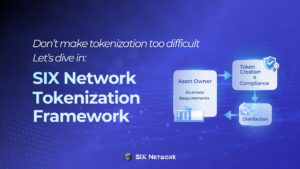
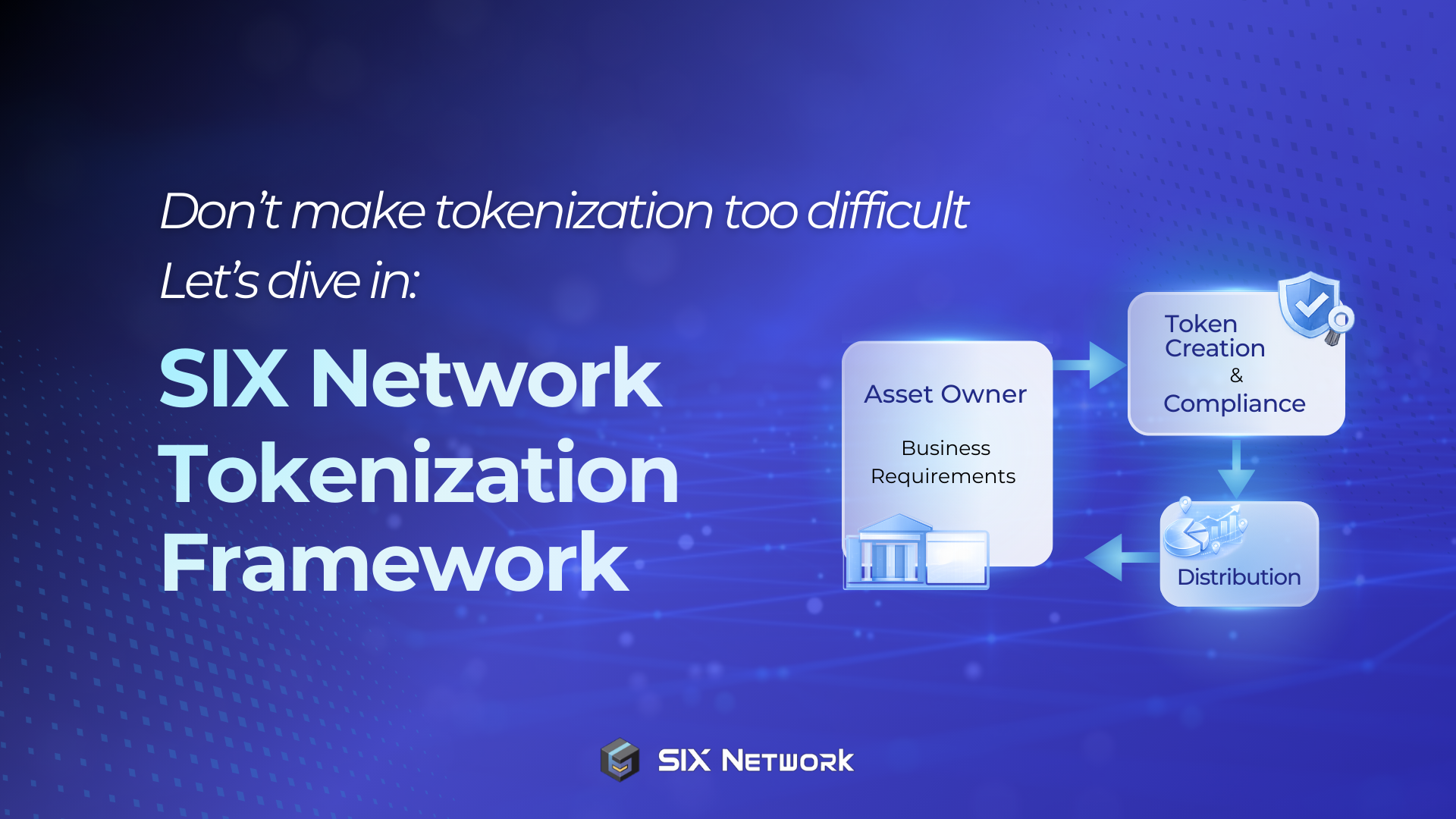
SIX Network Tokenization Framework

If you believe tokenization is difficult, try tokenizing with us first.

Let’s take a deep dive into the “SIX Network Tokenization Framework.”


Key Highlights
• The challenges of tokenization
• SIX Network’s tokenization framework


The process of RWA Tokenization is not something that can be easily built or developed independently. It involves multiple complex steps in order to successfully create a token issuance project for different types of assets.


Challenges of Tokenization

• Strict Regulatory Compliance

One of the biggest challenges lies in regulatory compliance across different jurisdictions. Some countries have not yet officially enabled RWA tokenization, while others impose strict requirements that projects may not initially meet. As a result, licenses must be obtained or project structures must be adjusted to align with legal frameworks, processes that are both complex and time-consuming.


• Customization Gap

Designing and building a successful tokenization structure can be one of the most difficult steps, especially for traditional companies attempting to develop tokenization projects on their own.


• UX & Wallet Experience Still a Barrier

The digital experience of many projects remains difficult for general users to access, making RWA tokenization feel distant and unfamiliar to the broader market.


• Fragmented Infrastructure

Tokenization-related systems remain fragmented across legal frameworks, asset data, financial systems, and blockchain infrastructure, making integration across these components highly complex.


Even for those within the Web3 industry, RWA remains a challenging space. 

This is why specialized tools and experienced tokenization providers are essential to ensure projects can move forward efficiently and smoothly. It is therefore understandable why many perceive tokenization as difficult and inaccessible, often simply because they have not yet seen the SIX Network framework.


SIX Network Tokenization From Real-World Assets to Market-Ready Tokens 

As a blockchain solutions provider specializing in RWA tokenization, SIX Network offers a comprehensive solution for transforming real-world assets into digital assets through a tool called SIX Garage, which was introduced during our 2025 roadmap live session.


We have designed a complete tokenization structure
from start to finish as follows.


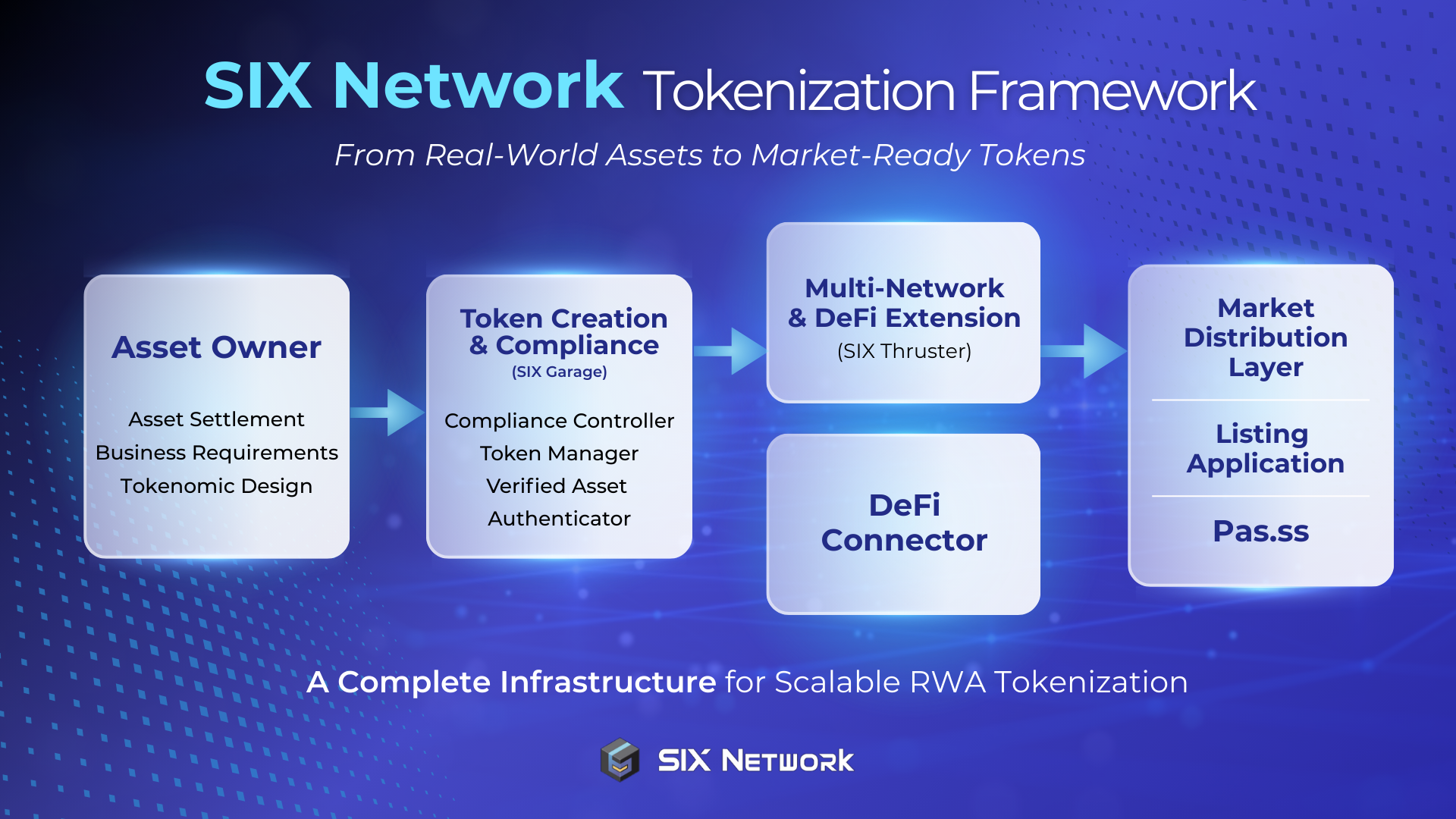
SIX Network Tokenization From Real-World Assets to Market-Ready Tokens


SIX Network Tokenization Framework
A structured approach to preparing digital assets for token issuance, from start to finish.


📝 Starting with the Asset Owner
The first step involves working closely with asset owners or businesses to gather and analyze business requirements comprehensively.

This stage covers:
• Defining asset ownership structures and settlement mechanisms
• Designing tokenomics aligned with revenue models and investment strategies


🧑🏻‍🔧 Creation Stage
Once requirements are clearly defined, the process moves into the Creation stage.
Token Creation marks the official start of tokenization, entering the “race track.”


Key components of this stage include:

• Compliance Controller: A system that enforces regulatory requirements such as age restrictions, investor types, and jurisdiction-based rules to ensure full legal compliance.

• Token Management: Managing token rights and conditions, including transfer restrictions, eligibility rules, age requirements, and country-based access controls.

• Asset Verification & Authenticator: A critical step to verify the authenticity and legitimacy of real-world assets before tokenization, along with identity and permission verification for both issuers and token holders to ensure security and trust.


🌬️ Thruster: Accelerating Tokenization
After tokens are created, they require a powerful engine to accelerate performance on the track, this is where Thruster comes in.


Thruster consists of Multi-Network support, DeFi Extensions, and DeFi Connectors, enabling tokens to connect seamlessly across multiple blockchains and financial systems. This layer enhances scalability, usability, and liquidity for tokenized assets.


🏎️ Entering the Market
The final phase involves bringing tokens into real trading environments.
SIX Network does not perform this step alone, we collaborate with licensed third-party partners specializing in token listing and sales to ensure regulatory compliance and market readiness.


🏁 Crossing the Finish Line
Once tokens are officially launched or fundraising is successfully completed, the project reaches the finish line. The next step is distributing returns, such as dividends or project benefits, through Pas.ss, ensuring transparent and systematic reward distribution to token holders.


──────────────────────────────────


SIX Network is ready to provide end-to-end tokenization services, transforming real-world assets into digital assets with enterprise-grade blockchain infrastructure designed for institutional and large-scale projects.


For organizations interested in tokenization or integration
with the SIX Protocol, please contact us at 👉🏼 https://zeeg.me/sixnetwork

Learn more about SIX Network:

Website l Telegram l Twitter l Facebook l Discord l Medium

⎯⎯⎯⎯⎯⎯⎯⎯⎯⎯⎯⎯⎯⎯⎯⎯⎯⎯⎯⎯⎯⎯⎯⎯⎯⎯⎯⎯⎯⎯⎯⎯

Disclaimer:

1.This article is intended for informational purposes only. Please conduct your own research before making any investment decisions related to cryptocurrencies 2. Cryptocurrency and digital token involve high risk; investors may lose all investment money and should study information carefully and make investments according to their own risk profile.


Don’t miss out follow us at:

Warisara Thepsiri
Warisara Thepsiri

Experience the magic of Blockchain with SIX Network!

Related Posts

เจาะลึกโครงสร้างการทำ Tokenization ของ SIX Network

เจาะลึกโครงสร้างการทำ Tokenization ของ SIX Network

SIX Network Tokenization Framework

ถ้าหากคุณเข้าใจว่า Tokenization เป็นเรื่องยาก ลองมา Tokenized กับเราดูก่อน 

มาร่วมกันเจาะลึกใน  “SIX Network Tokenization Framework”


เนื้อหาที่เป็นไฮไลท์
• ความท้าทายของการทำ Tokenization
• โครงสร้างการทำ Tokenization ของ SIX Network


แน่นอนว่า process ของ Real-World Asset Tokenization ไม่ใช่เรื่องง่าย ๆ ที่ใครจะเป็นคนทำ หรือพัฒนาขึ้นมาด้วยตัวเอง ต้องผ่านขั้นตอนมากมาย เพื่อจะสร้างโปรเจกต์การออกโทเคนสำหรับสินทรัพย์ประเภทต่าง ๆ 


ความท้าทายของการทำ Tokenization

Strict Regulatory Compliance 

ความยากเรื่องของกฎหมายที่รองรับเรื่อง Tokenization ในแต่ละประเทศ เนื่องจากบางประเทศยังไม่เปิดให้สามารถทำ RWA ได้อย่างเป็นการ หรือข้อกำหนดของบางโครงการไม่ตรงตามเงื่อนไข จึงต้องมีการขอใบอนุญาต หรือปรับเปลี่ยนโครงสร้างของโปรเจกต์ เพื่อให้ตรงกับกฎหมาย ซึ่งซับซ้อนและใช้เวลาอย่างมาก 


• Customization Gap

การสร้างและออกแบบให้สำเร็จ อาจเป็นขั้นตอนที่ยากที่สุดหากบริษัทดั้งเดิมเริ่มต้นที่จะพัฒนาโครงการด้วยคนเอง


• UX & Wallet Experience Still a Barrier

ประสบการณ์ดิจิทัลของบางโครงการยังทำให้ผู้คนทั่วไปเข้าถึงได้ยาก ทำให้ RWA ดูเป็นเรื่องไกลตัว  


• Fragmented Infrastructure

ระบบที่เกี่ยวข้องกับ Tokenization ยังคงแยกส่วน ทั้งด้านกฎหมาย ข้อมูลสินทรัพย์ ระบบการเงิน และบล็อกเชน ทำให้การเชื่อมต่อแต่ละส่วนเข้าด้วยกันเป็นเรื่องซับซ้อน


แม้จะเป็นคนในวงการ Web3 เอง ยังต้องยอมรับว่า RWA ยังเป็นสิ่งท้าทาย จึงต้องมีเครื่องมือและผู้เชี่ยวชาญสำหรับรับทำ Tokenization โดยเฉพาะ เพื่อความรวดเร็วและให้โครงการเป็นไปอย่างราบรื่น เพราะงั้นคงไม่ผิดซะทีเดียว ที่หลายคนจะคิดว่า Tokenization เป็นเรื่องยากที่ไกลตัว แต่คงเพราะพวกเขายังไม่เคยเห็น framework ของ SIX Network 


SIX Network ในฐานะผู้ให้บริการโซลูชันบล็อกเชนและ RWA Tokenization เรามีโซลูชันสำหรับการเปลี่ยนสินทรัพย์จริงเป็นสินทรัพย์ดิจิทัล ด้วยเครื่องมือที่ชื่อว่า SIX Garage ซึ่งเปิดตัวไปในไลฟ์เผย Roadmap ปี 2568

โดยเราวางโครงสร้างการ Tokenized สินทรัพย์ไว้ดังนี้


SIX Network Tokenization From Real-World Assets to Market-Ready Tokens


SIX Network Tokenization Framework 

วางแผนการแปลงสินทรัพย์ดิจิทัลให้พร้อมสำหรับการออกโทเคน 

ตั้งแต่จุด Start จนถึงเข้าเส้นชัย 


📝 เริ่มจาก Asset Owner 

ขั้นตอนแรกคือการทำงานร่วมกับเจ้าของสินทรัพย์หรือธุรกิจ เพื่อ รับและวิเคราะห์ความต้องการทางธุรกิจ อย่างรอบด้าน ในขั้นตอนนี้จะครอบคลุมตั้งแต่

• การกำหนดรูปแบบการถือครองและการชำระบัญชีของสินทรัพย์

• การออกแบบ Tokenomics ให้สอดคล้องกับโมเดลรายได้และกลยุทธ์การลงทุน


🧑🏻‍🔧 เมื่อ Requiements ชัดเจนแล้ว จะเข้าสู่ขั้นตอน “Creation” 

Token Creation คือการเข้าสู่สนามแข่งรถ หรือเริ่ม Tokenize อย่างเป็นทางการ

ซึ่งองค์ประกอบของการสร้างมีทั้งเรื่องของ

Compliance Controller: ระบบที่ใช้ควบคุมและบังคับใช้กฎระเบียบที่สอดคล้องกับกฎหมาย ให้เป็นไปตามข้อกำหนด ทั้งด้านอายุ หรือประเภทของนักลงทุน
Token Management: ขั้นตอนจัดการสิทธิ์และเงื่อนไขของโทเคน เช่น กำหนดสิทธิ์และข้อจำกัดของโทเคน กำหนดอายุ และประเทศที่มีสิทธิ์ซื้อขาย  

  • Verify สินทรัพย์ และ Authenticator: อีกขั้นตอนสำคัญที่ต้องตรวจสอบความถูกต้องของสินทรัพย์จริงก่อนจะ Tokenize และยืนยันตัวตนสิทธิ์ของผู้เกี่ยวข้อง ทั้งฝั่งผู้ออกโทเคนและผู้ถือโทเคน เพื่อความปลอดภัย 


🌬️ เมื่อสร้างเสร็จแล้วก็เตรียมพร้อมแข่ง แต่ก่อนจะแข่งจริงต้องมี Thruster
เครื่องยนต์พิเศษที่ทำให้รถของคุณเร่งความเร็วบนสนามได้อย่างมีประสิทธิภาพ
ซึ่งประกอบไปด้วยส่วนสำคัญทั้ง Multi-Network, DeFi Extension และ DeFi Connector ส่วนนี้ทำหน้าที่เชื่อมต่อโทเคนเข้ากับเครือข่ายบล็อกเชนและระบบการเงินที่หลากหลาย เพื่อเพิ่มความสามารถในการขยาย การใช้งาน และสภาพคล่องของสินทรัพย์


🏎️ พร้อมลงแข่งสู่สนาม

ขั้นตอนสุดท้ายคือการนำโทเคนเข้าสู่ตลาดซื้อขายจริง 

ซึ่งขั้นตอนสร้างและการเปิดขายโทเคน SIX ทำสิ่งนี้ไม่ได้เพียงคนเดียว เราทำร่วมกับ third party ที่ได้รับอนุญาตทางด้าน listing และขายโทเคนโดยเฉพาะ 


🏁 เข้าสู่เส้นชัย 

เมื่อเปิดขายโทเคนอย่างเป็นทางการ หรือระดมทุนสำเร็จ เท่ากับว่ารถแข่งนี้ได้เข้าสู่เส้นชัยแล้ว ต่อมาคือการกระจายผลตอบแทน ไม่ว่าจะเป็น ปันผล หรือสิทธิประโยชน์ต่าง ๆ ของโครงการ โดยสิทธิพิเศษนั้นจะอยู่บน Pas.ss เพื่อมอบให้ผู้ถือโทเคนอย่างเป็นระบบและโปร่งใส 


SIX Network เราพร้อมแล้วที่จะให้บริการ Tokenize สินทรัพย์จริงสู่สินทรัพย์ดิจิทัล ด้วยโครงสร้างพื้นฐานบล็อกเชนระดับองค์กรและโครงการระดับสถาบัน 


สำหรับองค์กรที่สนใจด้าน Tokenization หรือการเชื่อมต่อกับ

SIX Protocol สามารถติดต่อเราได้ที่ 👉🏼 https://zeeg.me/sixnetwork

เรียนรู้เพิ่มเติมเกี่ยวกับ SIX Network:

Website l Telegram l Twitter l Facebook l Discord l Medium

⎯⎯⎯⎯⎯⎯⎯⎯⎯⎯⎯⎯⎯⎯⎯⎯⎯⎯⎯⎯⎯⎯⎯⎯⎯⎯⎯⎯⎯⎯⎯⎯

หมายเหตุ:

1. บทความนี้จัดทำขึ้นเพื่อให้ข้อมูลเท่านั้น โปรดศึกษาข้อมูลด้วยตนเองก่อนตัดสินใจลงทุนในสกุลเงินดิจิทัลหรือสินทรัพย์ดิจิทัลใด ๆ

2. การลงทุนในสกุลเงินดิจิทัลและโทเคนดิจิทัลมีความเสี่ยงสูง ผู้ลงทุนอาจสูญเสียเงินลงทุนทั้งหมด จึงควรศึกษาข้อมูลอย่างรอบคอบ และลงทุนให้เหมาะสมกับระดับความเสี่ยงที่ตนเองยอมรับได้


Don’t miss out follow us at:

Warisara Thepsiri
Warisara Thepsiri

Experience the magic of Blockchain with SIX Network!

Related Posts

SIX Network Wrapped 2025 สรุปเหตุการณ์สำคัญในปีที่ผ่านมา

SIX Network Wrapped 2025 สรุปเหตุการณ์สำคัญในปีที่ผ่านมา

SIX Network Wrapped 2025

ภาพรวมปี 2568 ปีนี้เป็นปีของการเสริมความแข็งแกร่งด้านโครงสร้างพื้นฐานบล็อกเชน การเชื่อมต่อระบบนิเวศข้ามเครือข่ายกับพาร์ทเนอร์ด้วยกัน รวมถึงขยายการพัฒนา RWA Tokenization ให้เห็นเป็นผลงานที่จับต้องได้ และการนำบล็อกเชนไปใช้งานจริงในภาคธุรกิจ ซึ่งตรงตามเป้าหมายที่เราวางไว้แผนงานของปี 2568 นี้ โดยจะมาสรุปให้เห็นว่าแต่ละพาร์ทของเราได้ทำอะไรสำเร็จไปบ้าง 


SIX Network Wrapped 2568 👇🏼

1. RWA และ Tech Adoption 4 โปรเจกต์  

• ระบบบล็อกเชนจัดการสิทธิพิเศษสำหรับโปรเจกต์ KAVALON Token 

• ให้บริการโครงข่ายบล็อกเชนสำหรับโปรเจกต์ SiriHub2 

• กิจกรรม NFT ที่พัฒนาผ่านบล็อกเชนสำหรับ NFT Treasure Hunt & Networking Quest SS3 งาน Techsauce Global Summit 2568

• NFT Collection บน Pas.ss สำหรับซีรีส์ The Bangkok Boy Series 


Wrapped 📝4 โปรเจกต์หลักที่เกิดขึ้นจริงบน SIX Protocol 
ในปี 2568 SIX Network ได้พัฒนาและสนับสนุนโครงการด้าน RWA Tokenization และการประยุกต์ใช้เทคโนโลยีบล็อกเชนในหลากหลายรูปแบบ ตั้งแต่โครงการอสังหาริมทรัพย์อย่าง KAVALON Token ของ AssetWise ซึ่ง SIX Network ได้เป็นผู้ให้บริการ ระบบจัดการสิทธิพิเศษสำหรับผู้ถือสินทรัพย์ดิจิทัลผ่านแพลตฟอร์ม Pas.ss ที่สร้างมูลค่าสินทรัพย์บนเชน SIX Protocol กว่า 400 ล้านบาท


ขณะเดียวกัน SIX Network ยังให้บริการโครงข่ายบล็อกเชนสำหรับ SiriHub2 โทเคนเพื่อการลงทุน มูลค่าสินทรัพย์บนเชน 2.49 พันล้านบาท เพื่อรองรับการใช้งานในระดับโครงสร้างพื้นฐานของภาคธุรกิจ รวมถึงนำบล็อกเชนไปใช้กับกิจกรรม NFT Treasure Hunt & Networking Quest SS3 ในงาน Techsauce Global Summit 2568 เพื่อเชื่อมต่อประสบการณ์กิจกรรมออฟไลน์กับผู้ใช้งานจริงเข้ากับสินทรัพย์ดิจิทัลบนเชน


นอกจากนี้ SIX Network ยังมีการพัฒนา NFT Collection สำหรับซีรีส์ “The Bangkok Boy Series” บน Pas.ss เพื่อขยายการใช้งานบล็อกเชนสู่อุตสาหกรรมการบันเทิง และเชื่อมโยงสินทรัพย์ดิจิทัลเข้ากับลูกเล่นของ NFT ที่ให้แฟนคลับ หรือคอมมูนิตี้เข้าถึงได้อย่างเป็นรูปธรรม


2. Ecosystem Growth 

• เปิดตัว SIX Garage โซลูชันการ Tokenization แบบครบวงจร ใน AMA Live เปิดตัวแผนงาน 2568 

• SIX Protocol Upgrade V4.0 ยกระดับโครงสร้างบล็อกเชน เตรียมพร้อมรองรับการทำงานระดับองค์กรและสถาบัน

• SIX Token ได้ลิสต์บน Maxbit แพลตฟอร์มนายหน้าซื้อขายสินทรัพย์ดิจิทัลของไทย โดย PTG

• Migrate NFT จาก 2 อีเวนท์ Techsauce Global Summit และ The Bangkok Boy Series มายัง Pas.ss

• เปิดตัว Community Pas.ss ตัวช่วยสร้างหรือจัดการกิจกรรมกับกลุ่มเพื่อน ๆ ที่งาน BITKUB SUMMIT 2568 


Wrapped 📝 การเติบโตของระบบนิเวศ โครงสร้างพื้นฐาน และชุมชนของเรา
การเติบโตของ Ecosystem ในปี 2568 เกิดขึ้นควบคู่กันทั้งในด้านเทคโนโลยีและการสร้างชุมชน SIX Network เปิดตัว SIX Garage เพื่อเป็นโซลูชันด้าน Tokenization แบบครบวงจรสำหรับนักพัฒนาและองค์กร พร้อมทั้งอัปเกรด SIX Protocol V4.0 เพื่อยกระดับความพร้อมของระบบสำหรับการใช้งานในระดับสถาบัน


ในด้านการเข้าถึง SIX Token ได้รับการลิสต์บน Maxbit ช่วยขยายช่องทางให้ผู้ใช้งานในประเทศไทยสามารถเข้าถึงระบบนิเวศได้ง่ายขึ้น ขณะเดียวกัน การ Migrate NFT จากกิจกรรมสำคัญมายัง Pas.ss และการเปิดตัว Community Pas.ss ยังช่วยเชื่อมโยงผู้ใช้งาน กลุ่มเพื่อน และกิจกรรมต่าง ๆ เข้าด้วยกันในแพลตฟอร์มเดียว


ทั้งหมดนี้สะท้อนการเติบโตของ Ecosystem ที่ไม่ได้จำกัดอยู่แค่เทคโนโลยี แต่ครอบคลุมถึงประสบการณ์และการมีส่วนร่วมของผู้ใช้งานด้วย


3. Strategic Partnerships 

  • • ประกาศความร่วมมือในการพัฒนาโปรเจกต์ G-Token
    กับ XSpring Digital, Krungthai XSpring, KuCoin Thailand และ KuCoin Global  
  • • ประกาศความร่วมมือกับ VaaSBlock พร้อมได้การรับรองมาตรฐาน RMA
    สำหรับผู้ให้บริการบล็อกเชน SIX Protocol 
  • • ประกาศความร่วมมือกับ OnFinality และขยายความร่วมมือทางธุรกิจ
    เพื่อขับเคลื่อนการทำ RWA Tokenization
  • • ประกาศความร่วมมือกับ Elysia ผู้ให้บริการ Web3
    ที่มุ่งเน้นการพัฒนา RWA Tokenization จากเกาหลีใต้
  • • ประกาศความร่วมมือกับ SETAI Agents แพลตฟอร์มที่ใช้ AI พัฒนาการลงทุนใน Web3 และ RWA  
  • • ประกาศความร่วมมือกับ fanC Official โปรเจกต์ Web3 อุตสาหกรรมบันเทิง ผู้ให้บริการแพลตฟอร์ม CELEBe ชื่อดังจากเกาหลีใต้ 


Wrapped 📝ขยายความร่วมมือในหลากหลายอุตสาหกรรม
ตลอดปี 2568 SIX Network ได้ขยายความร่วมมือเชิงกลยุทธ์กับพาร์ทเนอร์จากหลากหลายอุตสาหกรรม เพื่อผลักดันการใช้งานบล็อกเชนและ RWA Tokenization ในระดับที่กว้างขึ้น ทั้งในภาคการเงิน เทคโนโลยี และอุตสาหกรรมดิจิทัล


ความร่วมมือในการพัฒนา โครงการ G-Token ร่วมกับกลุ่มพันธมิตรด้านการเงินและแพลตฟอร์มสินทรัพย์ดิจิทัล ช่วยสะท้อนบทบาทของ SIX Network ในการสนับสนุนโครงการระดับสถาบัน ขณะที่การทำงานร่วมกับ VaaSBlock และการได้รับการรับรองมาตรฐาน RMA ตอกย้ำความพร้อมของ SIX Protocol ในฐานะผู้ให้บริการโครงสร้างพื้นฐานบล็อกเชน


นอกจากนี้ การขยายความร่วมมือกับ OnFinality, Elysia, SETAI Agents และ fanC ยังช่วยเสริมศักยภาพของระบบนิเวศในด้านโครงสร้างพื้นฐาน ข้อมูล และการพัฒนา use case ใหม่ ๆ ทั้งในกลุ่ม RWA, Web3 และอุตสาหกรรมบันเทิง


4. Blockchain Adoption 

  • • Bitkub Exchange รองรับ SIX Token และ SIX Protocol EVM สำหรับฝาก-ถอน อย่างเป็นทางการ
  • • SIX Network เข้าร่วม Validator Node สำหรับ KUB Chain และ JFIN Chain 
  • • KUB Chain และ JFIN Chain เข้าร่วม Validator Node สำหรับ SIX Protocol 
  • • SIX Network และ OnFinality ขยายความร่วมมือ พร้อมเชื่อมต่อ Official Indexer สำหรับ SIX Garage เพื่อส่งเสริมการพัฒนาโปรเจกต์ RWA Tokenization 
  • • SIX Network ร่วมกับ KUB Chain และ JFIN Chain เปิดระบบเชื่อมต่อสินทรัพย์ข้ามเครือข่ายผ่าน Bridge ระหว่างกันได้อย่างเป็นทางการ 


Wrapped 📝 การนำบล็อกเชนไปใช้งานจริงในระดับ Ecosystem
ปี 2568 เป็นปีที่การใช้งานบล็อกเชนของ SIX Network ขยายตัวในเชิงโครงสร้างและการเชื่อมต่ออย่างชัดเจน การที่ Bitkub Exchange รองรับ SIX Token และ SIX Protocol EVM อย่างเป็นทางการ ช่วยเพิ่มความสะดวกในการเข้าถึงและใช้งานเครือข่าย


ในระดับเครือข่าย SIX Network ได้ทำงานร่วมกับ KUB Chain และ JFIN Chain ทั้งในบทบาทของ Validator Node และการเปิดใช้งานระบบ Bridge สำหรับการโอนสินทรัพย์ข้ามเครือข่าย ทำให้การเชื่อมต่อระหว่าง ecosystem เกิดขึ้นได้จริง


ขณะเดียวกัน การขยายความร่วมมือกับ OnFinality และการเชื่อมต่อ Official Indexer เข้ากับ SIX Garage ยังช่วยสนับสนุนการพัฒนาโปรเจกต์ RWA Tokenization และการเข้าถึงข้อมูลบนเครือข่ายได้อย่างมีประสิทธิภาพมากยิ่งขึ้น


ผลงานทั้งหมดในปีนี้สะท้อนทิศทางของเรา ที่มุ่งเน้นเรื่องพัฒนาบล็อกเชนเพื่อเกิดการใช้งานจริง และสร้างมูลค่าสินทรัพย์บนเชน SIX Protocol รวมถึงความร่วมมือกับพาร์ทเนอร์ใหม่ ๆ เพื่อสร้างกลยุทธ์เชิงธุรกิจ และขยายการเติบโตของระบบนิเวศอย่างมั่นคง นี่คือ SIX Network Wrapped 2568 และเป็นรากฐานสำคัญสำหรับการก้าวต่อในปีถัดไป

เรียนรู้เพิ่มเติมเกี่ยวกับ SIX Network:

Website l Telegram l Twitter l Facebook l Discord l Medium
⎯⎯⎯⎯⎯⎯⎯⎯⎯⎯⎯⎯⎯⎯⎯⎯⎯⎯⎯⎯⎯⎯⎯⎯⎯⎯⎯⎯⎯⎯⎯⎯

Note:

1.This article is intended for informational purposes only. Please conduct your own research before making any investment decisions related to cryptocurrencies

2. Cryptocurrency and digital token involve high risk; investors may lose all investment money and should study information carefully and make investments according to their own risk profile.

Don’t miss out follow us at:

Warisara Thepsiri
Warisara Thepsiri

Experience the magic of Blockchain with SIX Network!

Related Posts

SIX Network Wrapped 2025 Key Highlights and Milestones

SIX Network Wrapped 2025 Key Highlights and Milestones

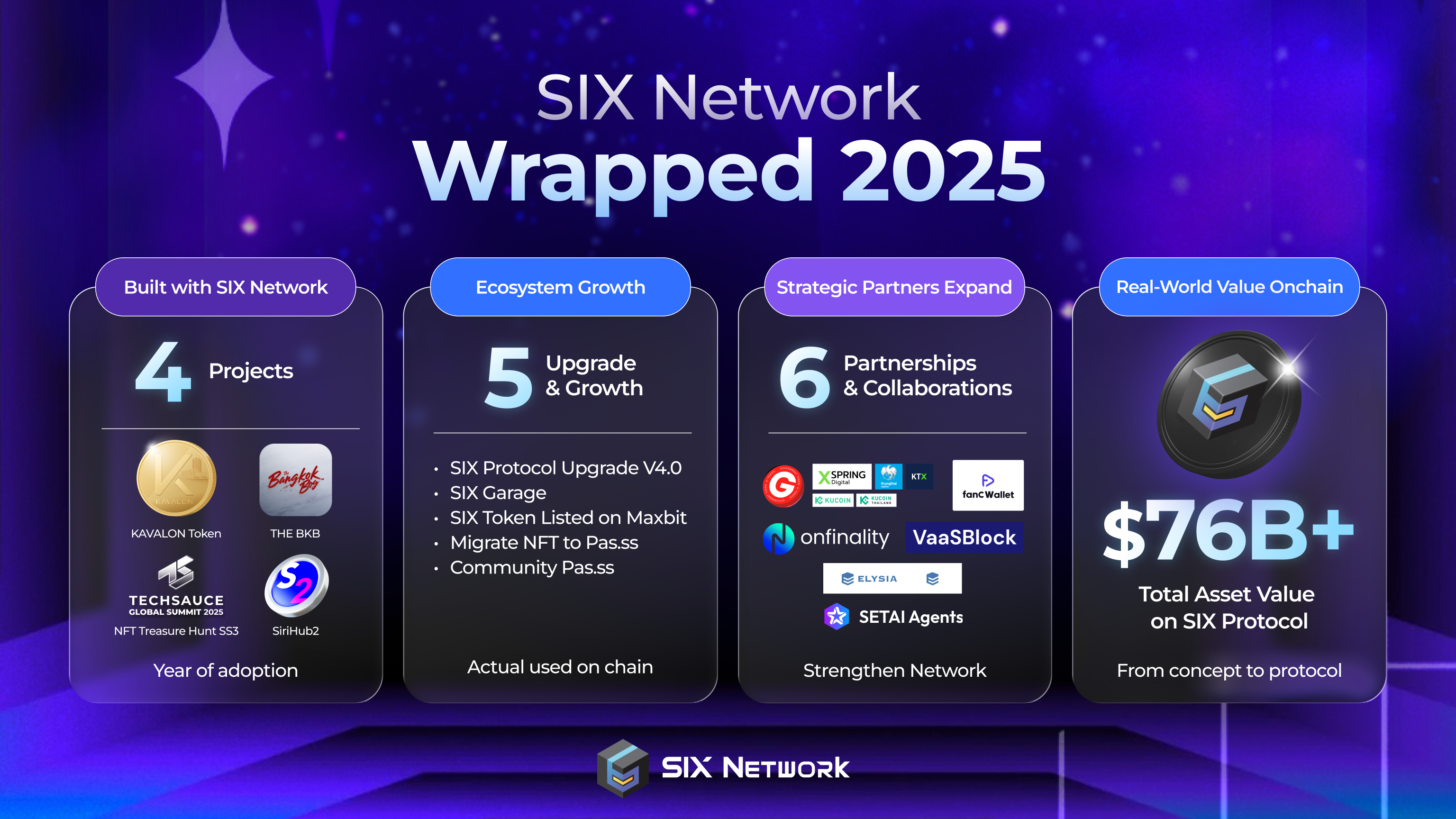
SIX Network Wrapped 2025

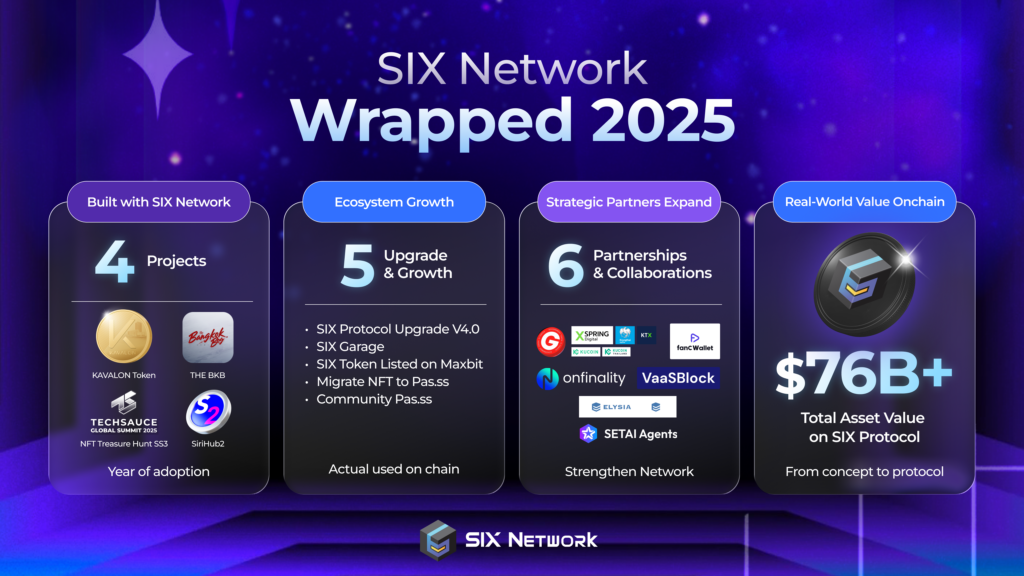
2025 was a year focused on strengthening blockchain infrastructure, expanding ecosystem integration and connectivity with strategic partners, including advanced RWA tokenization into tangible, real-world implementations.


These efforts aligned closely with SIX Network’s roadmap for 2025, emphasizing real adoption and enterprise-ready use cases. Below is a summary of what each part of the SIX Network ecosystem achieved throughout the year.


This is SIX Network Wrapped 2025 👇🏼


1. RWA & Technology Adoption
4 Key Projects Deployed on SIX Protocol

 Blockchain-based privilege management system for the KAVALON Token

  • • Blockchain infrastructure provider for the SiriHub2 project
    • NFT-powered activities for NFT Treasure Hunt & Networking Quest SS3 at
    Techsauce Global Summit 2025

    • NFT Collection on Pas.ss for The Bangkok Boy Series


Wrapped 📝 Real Projects, Real Adoption on SIX Protocol

In 2025, SIX Network developed and supported RWA tokenization and blockchain applications across multiple formats and industries. One key project was KAVALON Token, a real-estate-backed initiative by AssetWise, where SIX Network provided a blockchain-based privilege management system through Pas.ss, enabling digital asset holders to access real benefits. This project generated over THB 400 million in onchain asset value on SIX Protocol.


At the same time, SIX Network delivered blockchain infrastructure for SiriHub2, an investment-focused token project with over THB 2.49 billion in on-chain asset value, supporting enterprise-level deployment and scalability.


Blockchain technology was also applied to experiential use cases, including NFT Treasure Hunt & Networking Quest SS3 at Techsauce Global Summit 2025, connecting offline event participation with on-chain digital assets.


Additionally, SIX Network launched The Bangkok Boy Series NFT Collection on Pas.ss, expanding blockchain adoption into the entertainment industry and enabling fan communities to interact with digital assets in a tangible and accessible way.


2. Ecosystem Growth

  • Launch of SIX Garage, a full-stack tokenization solution, during the AMA Live for the 2025 roadmap
    SIX Protocol Upgrade V4.0, enhancing infrastructure readiness for enterprise and institutional use
    • SIX Token is listed on Maxbit, a Thai digital asset brokerage operated by PTG
    • Migration of NFTs from Techsauce Global Summit and The Bangkok Boy Series to Pas.ss
    • Launch of Community Pas.ss, a tool for managing group activities and communities, at BITKUB SUMMIT 2025


Wrapped 📝 Growing Infrastructure, Platform, and Community

Ecosystem growth in 2025 occurred across both technology and community dimensions. SIX Network introduced SIX Garage as an end-to-end tokenization solution for developers and enterprises, alongside SIX Protocol V4.0, which strengthened the platform’s capability to support institutional-grade operations.


On the access side, the listing of SIX Token on Maxbit expanded availability for users in Thailand. Meanwhile, migrating NFTs from major events to Pas.ss and launching Community Pas.ss helped unify digital assets, social interaction, and event participation within a single platform.


These developments reflect an ecosystem that grows not only through infrastructure, but also through user experience and engagement.


3. Strategic Partnerships

  • Collaboration on the G-Token Project with XSpring Digital, Krungthai XSpring, KuCoin Thailand, and KuCoin Global
    • Partnership with VaaSBlock, including RMA certification for SIX Protocol as a blockchain infrastructure provider
    • Expanded partnership with OnFinality to support RWA tokenization
    • Partnership with Elysia, a Korea-based Web3 provider focused on RWA tokenization
    • Collaboration with SETAI Agents, an AI-driven Web3 and RWA investment platform
    • Partnership with fanC Official, a Web3 entertainment project behind the CELEBe platform from Korea


Wrapped 📝Expanding Collaboration Across Industries

Throughout 2025, SIX Network strengthened strategic partnerships across finance, Web3 infrastructure, AI, and digital entertainment. The G-Token Project, developed with leading financial and digital asset partners, highlighted SIX Network’s role in supporting institutional-level initiatives.


Collaboration with VaaSBlock and achieving RMA certification further reinforced SIX Protocol’s credibility as an enterprise-ready blockchain infrastructure provider.

Meanwhile, partnerships with OnFinality, Elysia, SETAI Agents, and fanC enhanced ecosystem capabilities in infrastructure, data access, and the development of new use cases spanning RWA, Web3, and entertainment.


4. Blockchain Adoption

  • Bitkub Exchange officially supports SIX Token and SIX Protocol EVM deposits and withdrawals
    • SIX Network joined as a Validator Node for KUB Chain and JFIN Chain
    KUB Chain and JFIN Chain joined as Validator Nodes for SIX Protocol
    • Expanded collaboration with OnFinality, integrating the official indexer into SIX Garage
    • Official launch of cross-chain bridge connectivity between SIX Network, KUB Chain, and JFIN Chain


Wrapped 📝 Blockchain Adoption at the Ecosystem Level

2025 marked a significant expansion of blockchain adoption for SIX Network in both structural integration and cross-chain connectivity. Official support from Bitkub Exchange improved accessibility and usability for SIX Token and SIX Protocol EVM.


At the network level, SIX Network collaborated closely with KUB Chain and JFIN Chain through validator participation and the launch of cross-chain bridges, enabling seamless digital asset transfers between ecosystems.


Additionally, expanded collaboration with OnFinality and the integration of the official indexer into SIX Garage supported RWA tokenization projects and improved data accessibility for developers building on SIX Protocol.


All achievements in 2025 reflect SIX Network’s direction toward building blockchain infrastructure for real-world adoption, creating on-chain asset value, and forming strategic partnerships that support long-term ecosystem growth.


This is SIX Network Wrapped 2025, and it serves as a strong foundation for what comes next.

Learn More about SIX Network:

Website l Telegram l Twitter l Facebook l Discord l Medium
⎯⎯⎯⎯⎯⎯⎯⎯⎯⎯⎯⎯⎯⎯⎯⎯⎯⎯⎯⎯⎯⎯⎯⎯⎯⎯⎯⎯⎯⎯⎯⎯

Note:

1.This article is intended for informational purposes only. Please conduct your own research before making any investment decisions related to cryptocurrencies

2. Cryptocurrency and digital token involve high risk; investors may lose all investment money and should study information carefully and make investments according to their own risk profile.

Don’t miss out follow us at:

Warisara Thepsiri
Warisara Thepsiri

Experience the magic of Blockchain with SIX Network!

Related Posts